
Prolonged freezing temperatures cause thousands of burst pipes across Dallas-Fort Worth each winter. When water inside pipes freezes, it expands approximately 9% by volume, creating internal pressure exceeding 25,000 pounds per square inch—sufficient to rupture copper, PEX, and PVC materials. A pipe crack measuring just 1/8 inch releases 250 gallons of water every 24 hours, saturating drywall, insulation, and structural materials.
🚨 WATER FLOODING YOUR HOME RIGHT NOW?
DO THESE 3 THINGS IMMEDIATELY:
- TURN OFF WATER: Main shut-off valve (near street meter or garage wall) - turn clockwise until fully closed
- TURN OFF WATER HEATER: Gas: turn dial to "Pilot" | Electric: flip breaker switch
- CALL EMERGENCY SERVICES: (877) 360-5502 - 24/7 response in Dallas, Fort Worth, Arlington, Plano, and entire DFW metro
Table of Contents
Quick Answer
Burst pipes in Dallas-Fort Worth require immediate action within 48 hours to prevent toxic black mold. Turn off water immediately, document damage with photos, and call professionals within 24 hours. Mold germination begins at 24-48 hours in Texas humidity (60-75%). DIY drying fails—consumer dehumidifiers need 40+ days versus 3-5 days for industrial equipment. Professional extraction costs $2,500-$5,000 preventing $15,000-$40,000 mold remediation. Emergency response: (877) 360-5502 available 24/7 across DFW metro.
Key Takeaways
Critical Information for Dallas-Fort Worth Homeowners:
- 48-hour critical window: Mold spores (Stachybotrys chartarum) begin germinating 24-48 hours after water exposure in Dallas-Fort Worth's 60-75% winter humidity
- 80% of DFW homes use slab foundations placing pipes 6-12 inches underground—insufficient depth for Texas freeze protection (28°F+ causes failures)
- Pipes burst during thaw, not freeze: Ice acts as temporary plug; water floods when temperatures rise above 32°F and ice melts
- Professional extraction within 24h costs $2,500-$5,000 versus $15,000-$40,000 for delayed mold remediation when mitigation fails
- Insurance requires "immediate action" (24-48h max)—visible mold voids coverage under neglect clauses; policy mold caps: $5,000-$10,000
- Consumer equipment fails: Shop-vac dehumidifiers remove 30-50 pints/day; burst pipes release 2,000+ pints requiring industrial 150-200 pint/day units
- Emergency response available 24/7: Call (877) 360-5502 for 2-4 hour response in Dallas, Fort Worth, Plano, Arlington, Irving, Frisco, McKinney, and entire DFW metroplex
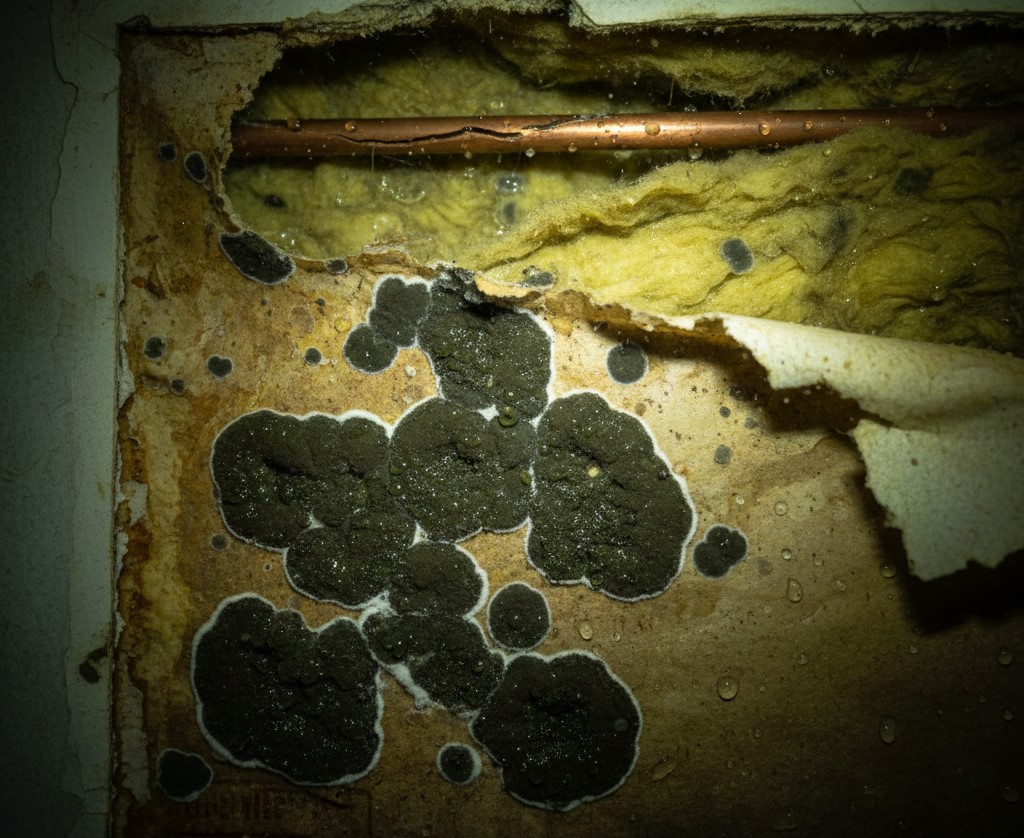
This creates ideal conditions for toxic black mold (Stachybotrys chartarum) to begin colonizing within 24-48 hours. The U.S. Environmental Protection Agency (EPA) confirms that mold can start growing on damp surfaces within this critical window. Dallas-Fort Worth homes face unique vulnerabilities due to slab foundation construction placing pipes only 6-12 inches underground, and attic plumbing systems exposing supply lines to unheated spaces. Historical freeze events—including February 2021's devastating storm and subsequent winter freezes—demonstrate the recurring risk North Texas homeowners face each cold season.
Most burst pipes appear during thaw periods as ice melts and water floods through frozen fractures. If you've discovered water damage in the last few hours, you're at hour zero of the 48-hour countdown. Every hour of delay increases moisture penetration, expands damage, and accelerates mold germination. This article provides emergency protocols, explains why immediate professional intervention prevents $3,000 water damage from becoming $30,000 mold remediation, and details insurance requirements that protect your claim.
📞 24/7 EMERGENCY RESPONSE IN DALLAS-FORT WORTH METRO
Call (877) 360-5502 for immediate water extraction and mold prevention.
Serving: Dallas, Fort Worth, Arlington, Plano, Irving, Frisco, McKinney, Richardson, Garland, Mesquite, Carrollton, Denton, Lewisville, and all DFW suburbs.
Emergency Action Plan: Your Critical First 60 Minutes
Immediate action after discovering a burst pipe determines whether damage costs $2,000 or $20,000. The EPA states that mold begins growing on damp surfaces within 24-48 hours under favorable conditions. Every hour of delay increases moisture penetration into porous materials and accelerates the countdown to mold germination. Follow these steps in exact order, prioritized by urgency and impact on final costs.
Minutes 1-5: Stop the Water Flow
Step 1: Locate and Close the Main Shut-Off Valve
Dallas-Fort Worth homes typically have the main water shut-off valve in one of three locations: near the street water meter (in a concrete box in the front yard), along the garage wall where the main line enters, or inside the home near the water heater. Turn the valve clockwise until it stops rotating completely. If the valve appears frozen, corroded, or won't turn, proceed immediately to Step 2.
Fort Worth homes built before 1990 may have gate valves requiring multiple full rotations to close. Newer construction features quarter-turn ball valves that close with a 90-degree handle rotation. If you cannot locate your shut-off valve, contact Dallas Water Utilities (214-651-1441) or Fort Worth Water Department (817-392-8222) for emergency assistance.
Step 2: Shut Off the Water Heater
Prevent water heater damage by following procedures specific to your system:
- Gas water heaters: Turn temperature dial to "Pilot" or "Vacation," then close the gas supply valve by turning it perpendicular to the pipe
- Electric water heaters: Locate your electrical panel and flip the breaker labeled "water heater" to OFF
- Tankless systems: Press power button to shut down, then close water supply valves on both cold intake and hot output lines
This prevents heating elements from running dry if the burst pipe affected hot water lines, which can cause element failure and tank rupture requiring complete replacement.
Minutes 5-15: Document the Damage
Insurance companies require proof that you discovered damage and acted immediately to mitigate further loss. Standard homeowners policies include a "duty to mitigate" clause that can void coverage if you delay reasonable protective steps. Documentation created within the first hour provides your strongest defense against claim denials.
Critical Photographic Evidence:
Burst pipe source: Photograph the failure point from multiple angles showing the crack or separation. Include reference objects (tape measure, coin) to establish scale. Capture whether the failure occurred in an attic supply line, slab foundation penetration, or wall cavity.
Water damage extent: Document every room with water damage, moisture stains, or standing water. Take wide shots from doorways showing full scope, then close-ups of specific damage. Photograph ceiling stains, wall discoloration, saturated carpet, and pooling water.
Material saturation: For attic bursts, photograph wet insulation, bowed ceiling drywall, and water dripping through fixtures. For slab leaks common in Dallas homes, document "warm spots" on flooring and damp carpet sections.
Weather conditions: Take exterior photos showing ice on roof edges, frozen outdoor faucets, and thermometer readings. This establishes connection between freezing temperatures and pipe failure for insurance purposes.
Video Documentation:
Record a 2-3 minute walkthrough narrating your discovery. State: "This is [date] at [time]. I discovered water damage in [location] and traced it to a burst pipe in [specific location]." Modern smartphones embed EXIF data including date, time, and GPS coordinates—metadata that provides strong proof of discovery timing for insurance adjusters.
Minutes 15-30: Remove Standing Water
Immediate water removal limits damage penetration and begins drying that prevents mold germination. Focus on removing bulk standing water first, then address saturated materials.
Safe Water Removal:
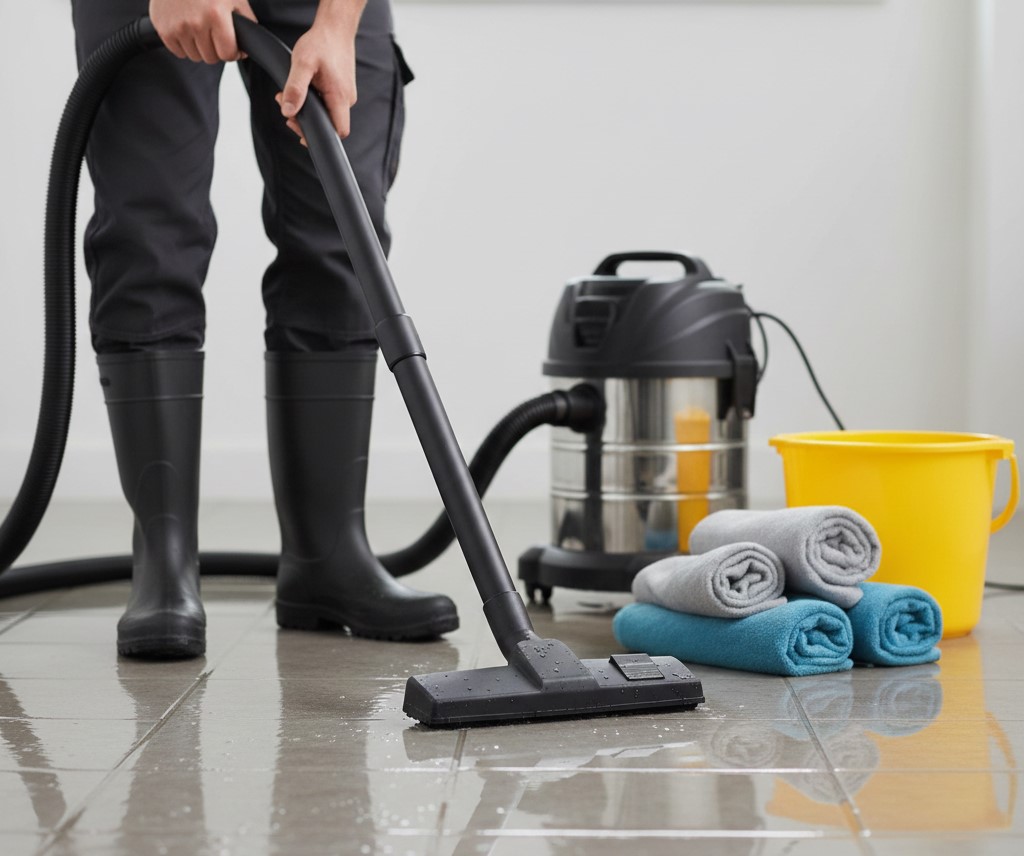
Use a wet/dry shop vacuum rated for water extraction. Standard household vacuums contain electrical components creating electrocution hazards when used on water. Never use regular vacuums on standing water. Position the shop vac nozzle directly on water and work systematically from the farthest point toward drains or exits.
For smaller puddles, use bath towels or mops. Wring saturated towels into buckets rather than washing machines—sudden water influxes can overwhelm residential machine pumps. If you have a sump pump or submersible utility pump, deploy it in areas with water depth exceeding one inch.
Material Removal:
Immediately remove area rugs, bath mats, and throw rugs. These absorb significant water and transfer moisture to flooring beneath. Hang them outside or in garages to dry—never pile wet textiles, as stacking creates oxygen-poor conditions accelerating mold growth.
Strip beds of linens, comforters, and mattress covers if water reached bedrooms. Pull curtains and drapes away from walls for air circulation. Open all cabinet doors under sinks and in bathrooms to expose wall cavities to room air.
Dallas-Fort Worth Slab Foundation Warning:
In slab foundation homes—comprising approximately 80% of Dallas-Fort Worth residential construction—water from burst pipes travels horizontally through concrete before surfacing. You may discover wet carpet 10-20 feet from the actual pipe failure point. Check all rooms adjacent to initial damage, especially those sharing plumbing walls.
Look for "warm spots" on tile or wood flooring indicating water actively wicking upward through the slab. Mark these locations with painter's tape so restoration professionals can target moisture detection equipment to hidden damage areas.
Minutes 30-60: Contact Professional Services
Two separate professionals handle pipe burst emergencies. Both should be contacted within your first hour for optimal damage prevention.
Emergency Plumber (Pipe Repair):
Licensed plumbers repair the failed pipe and prevent continued water release. Texas law requires plumbers to hold licenses issued by the Texas State Board of Plumbing Examiners. Request license verification and proof of liability insurance before allowing work.
Dallas-Fort Worth emergency plumbers typically respond within 2-4 hours for burst pipe calls. Repair costs range from $200-$800 depending on pipe location (accessible versus within walls), material type, and damage extent. Many homeowners policies cover emergency plumbing under sudden and accidental water damage provisions.
Water Damage Restoration Company (Mold Prevention):
Professional water extraction must begin within 24 hours to prevent mold growth. Restoration companies deploy industrial equipment removing moisture far more effectively than consumer tools. Certified technicians use equipment and techniques standardized by the Institute of Inspection, Cleaning and Restoration Certification (IICRC). Request verification that responding technicians hold IICRC Water Damage Restoration Technician (WRT) certification.
🔧 EMERGENCY PLUMBING + WATER EXTRACTION
One call handles both services across DFW metro:
Dallas, Fort Worth, Arlington, Plano, Irving, Frisco, McKinney, Richardson, Denton, Grand Prairie, Carrollton, Allen
(877) 360-5502 - 24/7 availability including nights, weekends, holidays
What Professionals Do (Hours 2-24)
Industrial Water Extraction:
Truck-mounted extraction units remove 50-100 gallons per minute through high-powered vacuum systems generating significantly more suction than portable units. These systems pull water from carpet padding, subfloors, and porous materials that consumer shop vacuums cannot affect. Portable extraction wands access areas truck-mounted systems cannot reach—closets, bathrooms, staircases, and distant rooms.
Thermal Imaging and Moisture Detection:
Thermal imaging cameras detect temperature differentials indicating hidden moisture behind walls, under flooring, and within ceiling cavities. Water-saturated materials appear cooler than surrounding dry areas, revealing full damage extent without destructive investigation.
Moisture meters measure water content in materials as percentages. Pin-type meters use probes inserted into drywall or wood measuring electrical resistance, which increases with moisture. Non-invasive meters scan surfaces without penetration. For Dallas slab homes, professionals use penetrating probes reaching beneath flooring into concrete, detecting sub-slab moisture before water surfaces through flooring materials.
Industrial Drying Equipment:
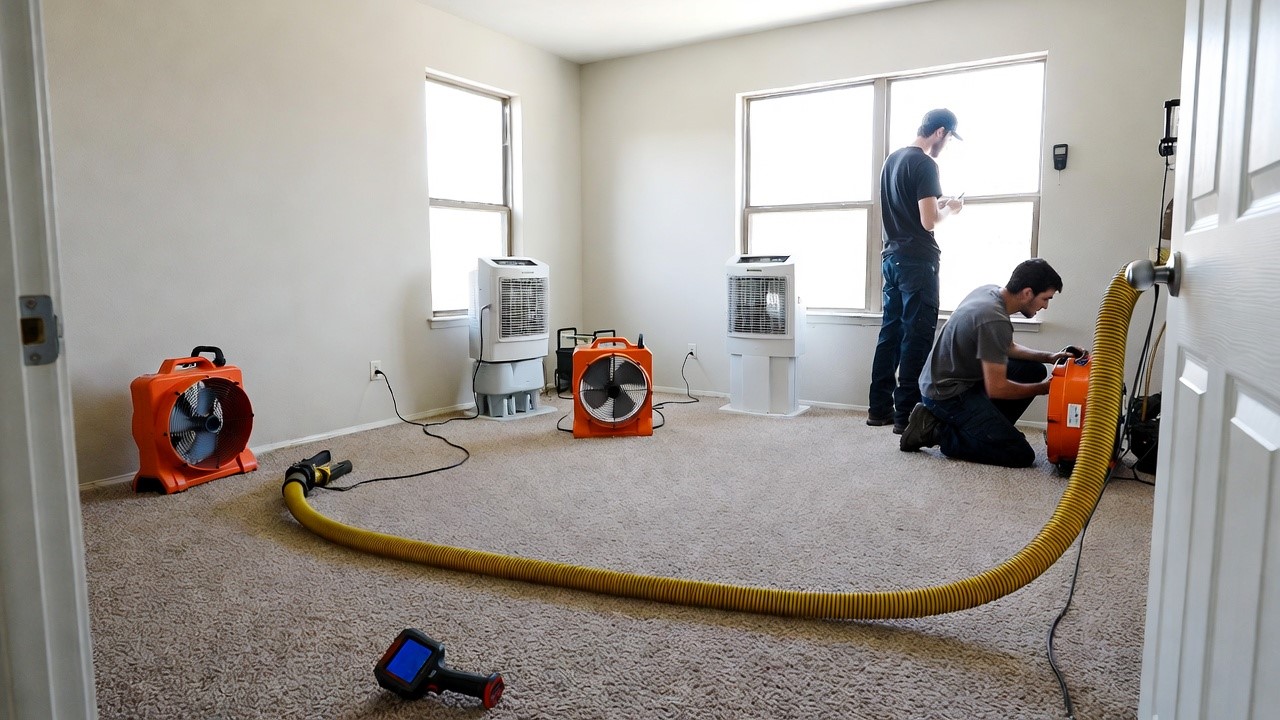
Commercial dehumidifiers remove 150-200+ pints of moisture per day compared to 30-50 pints for consumer models. A burst pipe releasing 250 gallons creates 2,000+ pints of moisture. Consumer dehumidifiers would require 40+ days to remove this volume—time during which mold colonies establish and spread extensively.
High-velocity air movers create directed airflow across wet surfaces at 2,000-3,000 cubic feet per minute. Technicians position air movers at calculated angles maximizing evaporation rates from specific materials. Proper drying in a standard bedroom requires 4-6 air movers operating continuously for 72-96 hours.
Antimicrobial Treatment:
After extraction and during initial drying, technicians apply EPA-registered antimicrobial solutions to all affected surfaces. These treatments create hostile environments for mold spore germination, providing protection even if moisture readings remain slightly elevated beyond the 48-hour window.
The 48-Hour Mold Timeline: Why Every Hour Counts
Mold growth after water damage follows predictable timelines based on moisture availability, temperature, and material composition. The EPA confirms that mold growth can begin within 24-48 hours on damp building materials and furnishings. Dallas-Fort Worth's ambient humidity (60-75%) and indoor heating (68-72°F) create optimal conditions for accelerated colonization. Understanding this timeline explains why immediate professional intervention produces dramatically better outcomes than delayed response.
Hour-by-Hour Progression After Water Damage
Hours 0-24: The Prevention Window
Mold spores exist in all indoor environments at low concentrations. These dormant spores require three conditions to germinate: moisture content above 60%, temperatures between 40-100°F, and organic material (cellulose, wood, drywall paper) as food. Burst pipes create all three simultaneously.
During the first 24 hours, spores absorb moisture and swell but haven't established hyphal structures—root-like filaments anchoring colonies to surfaces. Professional water extraction reducing material moisture below 15% within this window prevents germination entirely. Success rates exceed 95% when extraction begins within 12 hours of water damage.
Professional extraction and drying for medium-sized damage (500-1,500 square feet) costs $2,500-$5,000. This investment prevents mold remediation beginning at $10,000 for moderate contamination.
Hours 24-48: Germination Begins
Under ideal conditions—70°F ambient temperature and 60%+ relative humidity—mold spores begin sending out germ tubes approximately 24 hours after moisture contact. These microscopic structures are invisible but represent active colonization. Organisms shift from dormant to metabolically active, consuming cellulose and organic compounds.
Stachybotrys chartarum, commonly called "black mold," prefers cellulose-rich materials with high moisture content. Drywall paper facing provides ideal substrate. Gypsum drywall's porous structure wicks and holds water, maintaining sustained moisture Stachybotrys requires.
Professional intervention during hours 24-48 requires aggressive protocols. Antimicrobial treatments become necessary alongside mechanical drying. Some materials may require removal rather than drying in place. Costs increase to $3,000-$7,000 as labor and disposal expenses rise.
Hours 48-72: Visible Colonies Appear
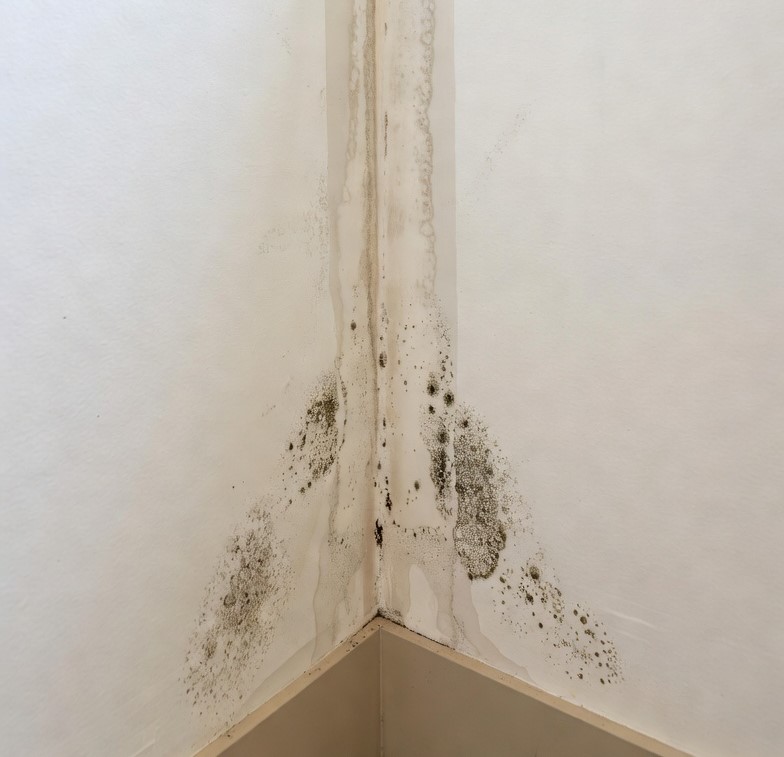
By 72 hours after water exposure, visible mold colonies appear as fuzzy spots in black, green, or white colors depending on species. Stachybotrys appears dark olive-green to black with slimy texture when moisture remains high.
The characteristic "musty" odor becomes detectable. This smell results from microbial volatile organic compounds (MVOCs)—gaseous byproducts of fungal metabolism. Odor detection indicates well-established colonies producing metabolic waste.
Mold remediation rather than water damage restoration becomes necessary. Affected drywall, insulation, and porous materials require removal and disposal per EPA guidelines. Costs jump to $5,000-$15,000 for moderate contamination affecting multiple rooms.
Days 4-14: Major Contamination
Within one week, multiple species colonize damaged areas. Aspergillus, Penicillium, Cladosporium, and Stachybotrys establish competing colonies. Spores become airborne as colonies mature and release reproductive structures. HVAC systems spread these spores throughout entire buildings, contaminating previously unaffected areas.
Health symptoms emerge in occupants, particularly those with asthma, allergies, or compromised immunity. Symptoms include persistent coughing, nasal congestion, throat irritation, eye watering, and skin rashes. Children under 5 and elderly over 65 face elevated severe reaction risk.
Whole-home remediation becomes necessary, involving containment barriers, negative air pressure, HEPA filtration, material removal, and post-remediation verification testing. Costs range $15,000-$40,000 depending on contamination extent and home size.
Why Dallas-Fort Worth Accelerates Mold Growth
Humidity Factor:
Dallas-Fort Worth experiences average winter relative humidity between 60-75%. This significantly exceeds the 60% threshold where mold growth rates increase exponentially. Research in the Journal of Applied Microbiology demonstrates that at 70-80% humidity (common in North Texas heated indoor environments), germination time decreases from 48 hours to as little as 24 hours for aggressive species.
Temperature Conditions:
Indoor heating systems maintain 68-72°F during winter—precisely within the 40-100°F range supporting vigorous mold growth. This consistent warmth prevents freeze-thaw cycles that might slow growth in unheated spaces. Stachybotrys chartarum demonstrates peak growth rates between 68-80°F, making heated Texas homes perfect incubators immediately after pipe bursts.
Construction Materials:
Dallas-Fort Worth slab foundation construction creates moisture traps. Water from under-slab pipe bursts wicks upward through concrete's capillary structure, remaining trapped between slab and flooring materials. This moisture sustains mold growth for weeks even after surface drying appears complete. Carpet padding and engineered wood flooring installed directly on slabs hold moisture tenaciously. Without professional extraction reaching beneath these materials, hidden colonies establish and spread laterally across slab surfaces.
Health Warning Signs
The Centers for Disease Control and Prevention (CDC) identifies mold exposure as a trigger for respiratory symptoms, allergic reactions, and asthma attacks. Stachybotrys chartarum produces mycotoxins—toxic compounds causing more severe health effects than common mold species.
Symptoms Within 2-4 Weeks:
Early symptoms mirror common allergies or colds, leading many to dismiss them as seasonal illness:
- Persistent nasal congestion unrelieved by over-the-counter medications
- Dry, non-productive cough lasting more than one week
- Watery, red, or itchy eyes without other cold symptoms
- Chronic scratchy throat or hoarseness
- Unusual fatigue despite adequate sleep
- Daily headaches, particularly frontal or temporal
Critical Diagnostic Pattern:
The most reliable indicator of indoor mold exposure is symptom improvement when away from home. If family members experience respiratory symptoms, headaches, or fatigue that consistently improve during work or school but return within 2-3 hours of arriving home, indoor air quality problems require investigation.
Children, elderly adults, pregnant women, and immunocompromised individuals face elevated risk. Those with pre-existing asthma may experience severe exacerbations requiring emergency medical treatment.
⚠️ HEALTH SYMPTOMS AFTER WATER DAMAGE?
If family members in Dallas, Plano, Frisco, or surrounding DFW areas show respiratory changes after pipe bursts, hidden mold contamination may be present. Professional inspection: (877) 360-5502)
Why Texas Homes Are Uniquely Vulnerable to Freeze Damage
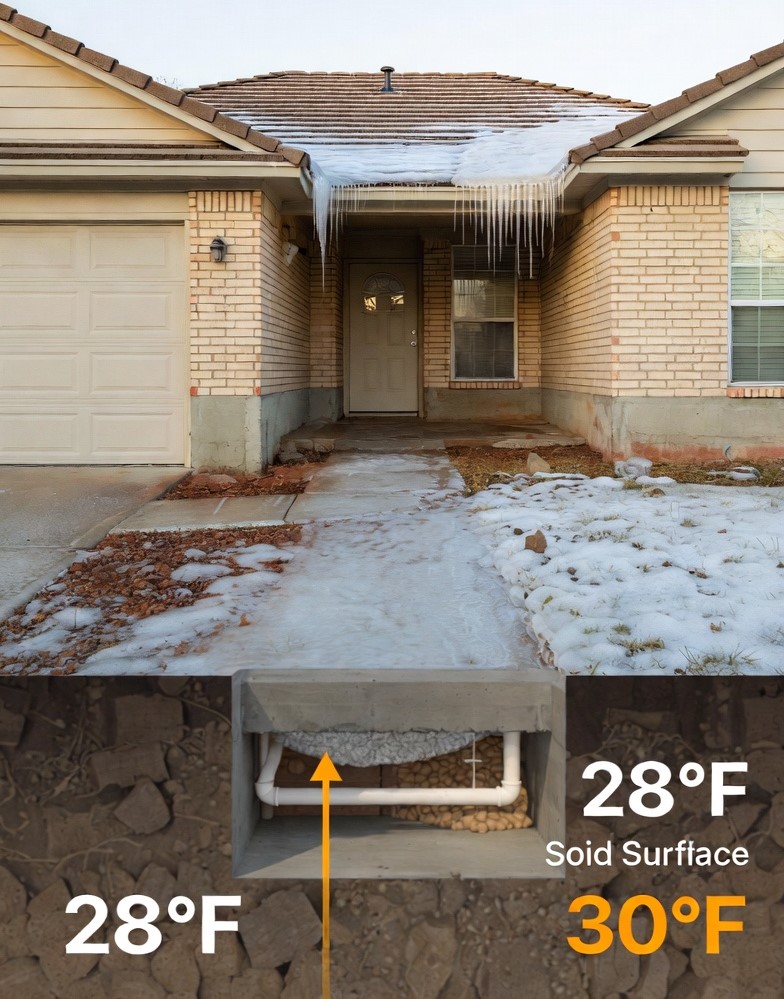
Dallas-Fort Worth construction practices create specific vulnerabilities during prolonged freezing events. Approximately 80% of Dallas-Fort Worth homes feature slab-on-grade foundations with plumbing lines embedded within or directly beneath concrete slabs. Texas builders also commonly route water supply lines, water heaters, and HVAC components through unheated attic spaces. These approaches, practical for Texas' typical climate, become critical failure points during extended freezes with temperatures below 28°F for 6+ consecutive hours.
Slab Foundation Construction Risks
Design Characteristics:
Slab-on-grade construction places concrete directly on prepared soil with minimal excavation. Supply and drain lines run horizontally through the slab or in shallow trenches 6-12 inches beneath the concrete surface. This contrasts with Northern construction where building codes require pipes below frost lines—typically 36-48 inches deep in states like Minnesota and Michigan.
North Texas clay-rich soils conduct cold temperatures efficiently during prolonged freezes. When arctic air masses settle over Dallas-Fort Worth for extended periods, ground temperatures at 6-12 inch depth fall rapidly below freezing. The February 2021 Texas winter storm demonstrated this vulnerability massively. Dallas Water Utilities reported a 600% increase in burst pipe service calls during that multi-day freeze event.
Critical Temperature: 28°F, Not 32°F
Texas pipes begin freezing at 28°F rather than the commonly assumed 32°F. This occurs because flowing water, pipe material thermal conductivity, and wind chill effects lower the practical freezing point. Research from plumbers in Southern states indicates burst-pipe problems appear when temperatures fall into the teens, though freezing can occur when temperatures remain above 20°F if pipes are exposed to cold air flow.
Pipes typically burst during thaw rather than during active freezing. Ice acts as a temporary plug holding cracks closed. When temperatures rise above 32°F, ice melts, pressure releases, and water floods through previously frozen fractures. This explains why Texas municipalities report concentrated burst pipe emergencies when temperatures rise after extended freezes.
Detection Challenges in Slab Homes:
Slab foundation pipe bursts remain invisible for 12-48 hours after occurrence. Water travels horizontally through concrete's porous structure before surfacing through flooring. Homeowners may notice "warm spots" on carpet or tile where water wicks upward creating temperature differentials.
Warning signs include:
- Water meter spinning when all fixtures are closed
- Unexplained water bill increases of 50%+ month-over-month
- Cracking in tile or wood flooring from moisture swelling
- Persistent musty odors without identified source
- Sound of running water when home is silent
High-Risk DFW Areas:
Slab foundation homes predominate in Dallas, Plano, Richardson, Irving, Arlington, Grand Prairie, Frisco, McKinney, Garland, Mesquite, Carrollton, Denton, Lewisville, Flower Mound, and Grapevine. High concentrations of 1980s-2000s construction using slab foundations exist in these communities. Homes built during rapid growth periods sometimes prioritized construction speed over comprehensive freeze protection.
Attic Plumbing Vulnerabilities
Texas Building Practice:
Texas builders route plumbing through attics because slab foundations complicate underground distribution. Running supply lines through accessible attic spaces reduces construction costs and simplifies future repairs. Water heaters frequently occupy attic platforms—roof-level placement eliminates closet space needs and provides gravity-assisted hot water pressure.
This functions adequately during normal Texas winters with brief 24-48 hour freezes. Multi-day freeze events expose vulnerability when attic temperatures remain below freezing for extended periods.
Thermal Dynamics:
Attic spaces lose heat rapidly during extended cold. Even with R-38 insulation (current code minimum), attics reach ambient outdoor temperature within 6-10 hours when outdoor temperatures remain below 20°F. Wind infiltration through soffit and ridge vents accelerates cooling. Building codes require attic ventilation preventing summer heat buildup, but these same vents allow arctic air circulation during winter.
Cascade Damage Pattern:
Attic pipe bursts create cascading water damage: pipe fails in attic, water sprays onto fiberglass or cellulose insulation, insulation saturates and loses thermal R-value while creating moisture reservoirs, water seeps through ceiling drywall joints and light fixture penetrations, gravity pulls water down wall interiors into floor cavities, and hidden moisture behind walls and under flooring supports extensive mold growth.
This explains why attic-origin water damage frequently produces more extensive mold problems—moisture distributes vertically through multiple building cavities.
High-Risk Properties:
Homes built during Dallas-Fort Worth's 1980s-2000s growth face particular vulnerability. Construction during these decades sometimes resulted in water heaters on inadequately insulated platforms, supply lines without foam insulation sleeves, and aging pipe materials past design lifespan. North-facing attics receive minimal solar warming during winter, maintaining colder temperatures than south-facing roof sections.
Fort Worth and Suburban Considerations
Fort Worth homes built before 1990 may have older gate valves rather than modern ball valves, requiring multiple rotations to close during emergencies. Suburban areas including Denton, Lewisville, Flower Mound, Grapevine, Coppell, and The Colony often feature mixed construction with both slab and pier-and-beam foundations. Pier-and-beam homes have crawlspace exposure requiring different winterization approaches.
🏠 SLAB FOUNDATION HOME IN DFW?
Thermal imaging detects hidden sub-slab moisture before visible damage appears. Professional inspection throughout Dallas-Fort Worth metro: (877) 360-5502)
Insurance Coverage and Real Costs in Dallas-Fort Worth
Homeowners insurance coverage for burst pipe damage depends critically on timing, documentation, and mitigation actions within the first 24-48 hours. Standard HO-3 policies (most common residential insurance) typically cover water damage from burst pipes as "sudden and accidental" loss. However, policies contain specific exclusions and requirements that void coverage if homeowners fail to meet notification deadlines or mitigation obligations.
What Texas Homeowners Insurance Covers
Typically Covered:
Standard policies cover water damage when pipes burst due to freezing during winter weather events:
- Structural damage: drywall, insulation, flooring, framing, ceiling materials
- Contents damage: furniture, electronics, clothing, personal property
- Emergency mitigation: professional water extraction and drying services
- Temporary housing: if home becomes uninhabitable (usually 10-20% of dwelling coverage)
Policies typically reimburse costs of accessing buried pipes—cutting through walls, flooring, or foundation to reach breaks. Emergency plumbing repair ($200-$800 average) generally falls under coverage provisions.
Typical Exclusions:
Mold coverage faces severe restrictions. Following widespread mold claims in the 2000s, insurers added specific mold limitations:
- Mold coverage caps: $5,000-$10,000 maximum (far below actual remediation costs)
- Exclusion for "gradual" damage or mold from neglect/delayed mitigation
- No coverage for mold from maintenance issues or pre-existing conditions
Critical requirement: Most policies mandate homeowners take "immediate action" preventing further damage. "Immediate" generally means within 24-48 hours. Delayed mitigation provides grounds for partial or complete claim denials.
Texas-Specific Requirements:
Homes left unheated or heated below 55°F during owner absence may face coverage denials for "increasing hazard" or "neglect." Texas policies often include specific freeze protection requirements in their terms. Review your policy's freeze protection clause before winter.
Documentation Requirements
Essential Evidence (First 24 Hours):
Insurance adjusters require specific documentation for efficient claim processing:
Time-stamped photos: Show damage extent before mitigation. Smartphones embed EXIF data including date, time, GPS coordinates providing strong proof of discovery timing.
Weather records: Screenshots from National Weather Service or Weather.com showing freezing temperatures during damage period establish connection between freeze conditions and pipe failure.
Discovery timeline: Written statement documenting when you discovered damage, when you shut off water, when you contacted professionals. Specific times matter—"7:45 AM on [date]" is stronger than "morning of [date]."
Professional receipts: Invoices from licensed plumbers and certified restoration companies showing emergency service dates prove immediate mitigation action.
Communication logs: Record all calls to insurance, contractors, service providers noting date, time, person contacted, conversation summary.
Red Flags Triggering Denials:
Adjusters watch for delayed reporting or inadequate mitigation signs:
- Gaps between damage discovery and professional calls exceeding 24-48 hours
- Visible mold growth (indicates 3-7 day mitigation delay)
- Lack of photo documentation before cleanup
- Conflicting timeline statements
- Evidence of pre-existing water damage or maintenance neglect
Professional restoration companies document findings upon arrival including moisture readings, temperature measurements, extent assessments. These third-party records corroborate your timeline and demonstrate professional-grade mitigation.
Dallas-Fort Worth Service Costs
Emergency Water Extraction (0-24 Hour Response):
Professional restoration costs vary based on affected area size, water volume, material types:
- Small area (under 500 sq ft): $1,500-$2,500
- Medium area (500-1,500 sq ft): $2,500-$5,000
- Large area (whole home/multiple floors): $5,000-$10,000+
Costs include emergency response within 2-4 hours, complete extraction using truck-mounted and portable equipment, thermal imaging and moisture detection, industrial dehumidifiers and air movers (3-5 days), antimicrobial treatment, daily moisture monitoring, and detailed insurance documentation.
Insurance typically covers these costs under sudden water damage provisions, subject to your deductible (commonly $1,000-$2,500).
Mold Remediation Costs (If Growth Occurs):
When professional drying begins 48+ hours after damage, mold colonization often requires extensive remediation:
- Limited remediation (under 10 sq ft): $500-$1,500
- Moderate contamination (10-100 sq ft): $2,000-$6,000
- Extensive contamination (100-300 sq ft): $5,000-$15,000
- Whole-home remediation (300+ sq ft or structural): $15,000-$40,000+
Remediation involves containment barriers, negative air pressure systems, HEPA filtration, contaminated material removal and disposal, antimicrobial treatment, and post-remediation verification testing. Most homeowners face out-of-pocket costs as policy mold caps ($5,000-$10,000 typical) fall well below actual expenses.
Cost-Benefit Analysis:
Immediate professional response produces dramatic savings:
- Immediate response (within 24h): $3,000 average, 95%+ mold prevention, typically insurance-covered
- Delayed response (48-72h): $8,000-$12,000 average (extraction + early remediation), partial coverage
- Multi-day delay (5-7 days): $15,000-$30,000+ (full remediation), largely uncovered due to "neglect" exclusions
Immediate response costs 75-90% less than delayed remediation while providing superior outcomes and stronger insurance coverage.
📋 NEED INSURANCE DOCUMENTATION HELP?
Certified restoration reports meet Texas insurance adjuster requirements. Professional inspection across Dallas, Fort Worth, Plano, Irving, and entire DFW metro: (877) 360-5502)
Frozen Pipe FAQ for Dallas-Fort Worth Homeowners
Why do pipes burst after freezing ends, not during the freeze?
Pipes burst during thaw rather than active freezing. When water freezes inside pipes, it expands 9% by volume creating internal pressure exceeding 25,000 PSI—sufficient to crack pipe materials. However, ice acts as a temporary plug holding the crack closed. When temperatures rise above 32°F, ice melts, internal pressure releases, and water floods through the previously frozen fracture. This explains why Texas municipalities report concentrated burst pipe emergencies when temperatures rise after extended freezes rather than during the coldest periods.
Can I dry water damage myself with equipment from Home Depot?
Consumer equipment proves inadequate for burst pipe volumes. Typical consumer dehumidifiers remove 30-50 pints per 24 hours. A pipe with 1/8-inch crack releases approximately 250 gallons daily—equivalent to 2,000+ pints. Consumer equipment would require 40-60 days removing this moisture while mold colonization progresses from germination to severe contamination in just 3-7 days. Professional equipment removes 150-200+ pints daily per dehumidifier with multiple units operating simultaneously. Professionals also use thermal imaging locating hidden moisture behind walls and under flooring that homeowners cannot detect. The cost difference between DIY failure ($15,000-$30,000 eventual remediation) versus professional extraction ($2,500-$5,000) strongly favors professional response.
How do I know if pipes burst under my slab foundation?
Slab foundation failures create specific warning signs: warm or damp spots on flooring where water wicks upward through concrete creating temperature differentials; water meter continuously spinning when all fixtures are closed indicating underground leak; unexplained water bill increases of 50-200% month-over-month; cracked or lifting tile and wood flooring from moisture swelling; persistent musty odors without identified source; sounds of running water when home is silent. Because water travels horizontally through concrete before surfacing, visible damage may appear 10-20 feet from actual break location. If you suspect slab leak, professional thermal imaging and acoustic leak detection provide non-invasive diagnosis. Call a Texas licensed plumber experienced with Dallas-Fort Worth slab foundation homes.
Will insurance cover mold if I waited several days to call professionals?
Coverage becomes questionable with multi-day delays between damage discovery and professional mitigation. Standard policies require "immediate" and "reasonable" steps preventing further damage. Insurance companies interpret "immediate" as 24-48 hours maximum. Visible mold growth provides physical evidence mitigation was delayed beyond recommended timeframes—mold typically becomes visible 3-7 days after water exposure. Adjusters view this as proof of failed policy mitigation requirements. Most policies specifically exclude mold damage from neglect, delayed maintenance, or inadequate mitigation. Even if initial burst pipe damage receives coverage, mold remediation costs likely fall under exclusions. Policy mold caps ($5,000-$10,000 typical) provide partial coverage, but actual remediation costs ($15,000-$40,000 for severe contamination) far exceed these limits. To protect coverage, call professional restoration services the same day you discover water damage.
Where can I get emergency help in Dallas-Fort Worth RIGHT NOW?
Emergency water extraction and mold prevention services are available 24/7 across the Dallas-Fort Worth metroplex. Call (877) 360-5502) for immediate response throughout the DFW metro including: Dallas, Fort Worth, Arlington, Plano, Irving, Frisco, McKinney, Richardson, Garland, Mesquite, Grand Prairie, Carrollton, Denton, Lewisville, Flower Mound, Grapevine, Allen, and Coppell. Services include emergency water extraction with 2-4 hour response, professional mold inspection and testing, thermal imaging for hidden moisture, industrial drying equipment, antimicrobial treatment, and detailed insurance documentation. Certified IICRC technicians available around the clock including nights, weekends, holidays. Response times in major metro areas typically range 2-4 hours; outlying areas may require 4-6 hours depending on location and call volume.
Act Now: The 48-Hour Decision
Prolonged freezing temperatures create recurring water damage emergencies across Dallas-Fort Worth each winter. The metroplex experiences one to two significant freeze events annually with temperatures dropping into the twenties or lower for multiple consecutive days. Texas homes' slab foundation construction and attic plumbing prove particularly vulnerable when temperatures remain below 28°F for extended periods. Historical freeze events—including February 2021's devastating storm and subsequent winter freezes—demonstrate consistent risk North Texas homeowners face during cold seasons.
Damage typically appears during thaw phases as ice melts and water floods through frozen fractures. Most homeowners discover burst pipes when temperatures rise above freezing, placing them at hour zero of the critical 48-hour countdown to mold germination.
The science is clear: mold spores begin germinating 24-48 hours after moisture exposure under warm, humid conditions in homes during winter. Dallas-Fort Worth's 60-75% relative humidity creates ideal colonization conditions. Stachybotrys chartarum—toxic black mold—produces mycotoxins creating serious health risks for children, elderly residents, and immunocompromised individuals.
The financial stakes are equally definitive. Professional water extraction within 24 hours costs $2,500-$5,000 average and prevents mold growth with 95%+ success rates. This investment is typically covered by homeowners insurance under sudden water damage provisions. Delayed response allowing mold colonization requires remediation costing $15,000-$40,000+ for severe contamination—expenses largely uncovered due to policy mold caps and "neglect" exclusions for delayed mitigation.
Every hour of delay increases moisture penetration into building materials, expands affected area, and moves you closer to germination threshold. The difference between manageable water damage and catastrophic mold remediation isn't initial pipe burst severity—it's professional response speed.
If you've experienced pipe failure, see water damage, notice ceiling stains, feel damp flooring, or smell musty odors, you are in the countdown. Waiting to "see if it dries" or "get estimates" wastes critical hours determining final outcomes and costs.
Note: Costs shown reflect Dallas-Fort Worth market averages as of January 2026. Actual pricing varies by service provider, damage extent, materials affected, and specific project requirements. Call (877) 360-5502 for accurate estimates from licensed contractors in your area.
⏰ EMERGENCY RESPONSE - CALL NOW
Professional mold prevention across Dallas-Fort Worth:
Call (877) 360-5502 immediately✓ 2-4 hour emergency response
✓ Available 24/7/365
✓ Insurance documentation included
✓ Serving entire DFW metroplex: Dallas, Fort Worth, Arlington, Plano, Irving, Frisco, McKinney, Richardson, Garland, Denton, and 15+ surrounding citiesThe 48-hour countdown starts the moment your pipe bursts. How many hours remain?