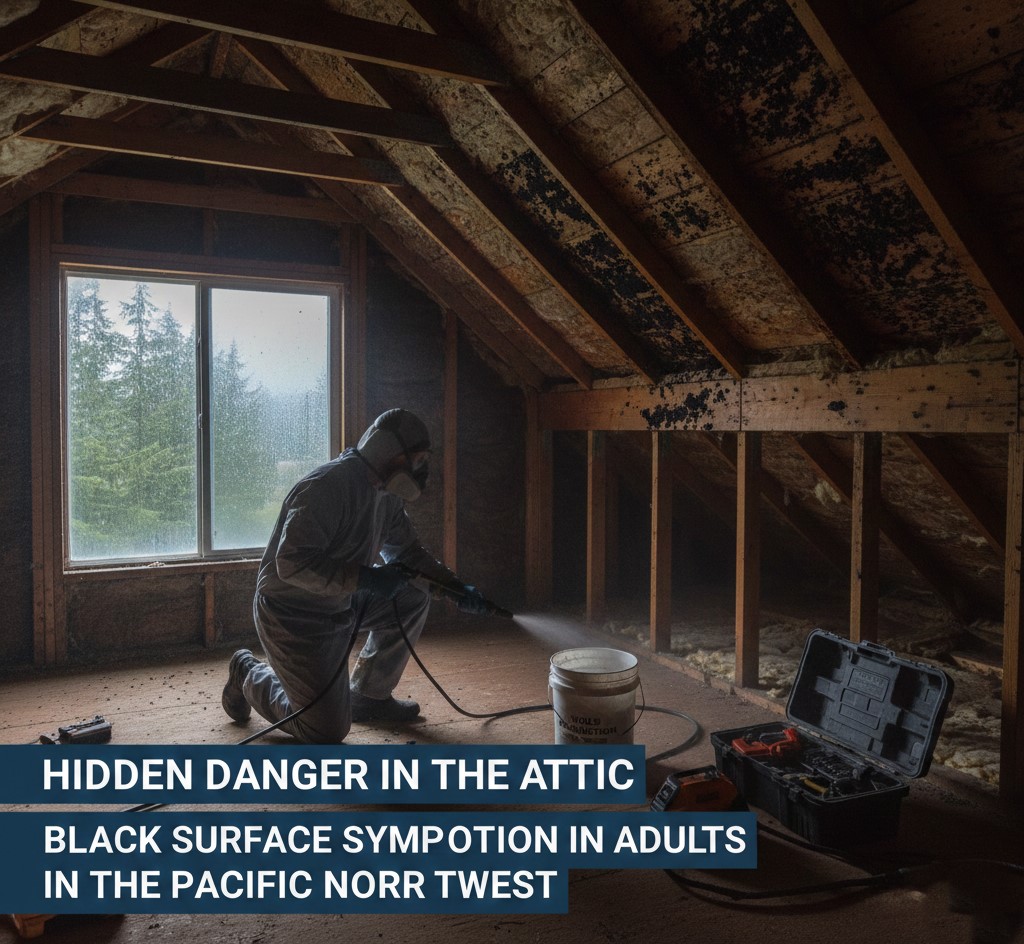
Hidden Danger in the Attic: Black Mold Symptoms in Adults and Wood Surface Remediation in the Pacific Northwest
For eight months, I blamed my brain fog on Seattle's gray winters. The real culprit? Black mold symptoms in adults from Stachybotrys on wood rafters. Learn attic mold remediation Seattle costs ($1,200-$8,000), when professional mold assessment Portland is essential, and cognitive recovery timelines.
Black Mold on Wood Rafters: Quick Answer
Can black mold on wood cause neurological symptoms? Yes. Stachybotrys chartarum (black mold) growing on wood surfaces produces trichothecene mycotoxins that cross the blood-brain barrier and damage neurons, causing brain fog, memory loss, chronic fatigue, persistent headaches, and cognitive impairment often misdiagnosed as depression or chronic fatigue syndrome. The CDC confirms mycotoxin exposure triggers neurological, respiratory, and immune dysfunction.
Why Pacific Northwest attics are high-risk: Seattle, Portland, and coastal cities average 150+ rainy days annually with 65-75% outdoor humidity year-round. Mold begins growing on wood within 24-48 hours when moisture exceeds 15-20%. Homes built 1920-1970 in neighborhoods like Capitol Hill, Queen Anne, and Laurelhurst typically lack vapor barriers and adequate ventilation.
Symptoms follow a progressive timeline: Early stage (months 1-2) brings persistent fatigue, mild headaches, and brain fog. Months 3-4 produce severe cognitive impairment—memory loss, confusion, inability to concentrate. Months 5-8 cause disorientation, mood changes, anxiety, and personality shifts.
Critical diagnostic indicator: Symptoms improve when away from home and worsen within 12 hours of returning—this pattern strongly suggests environmental mycotoxin exposure.
Professional vs DIY: Areas under 10 square feet may permit DIY treatment. Professional remediation necessary for contamination >10 sq ft, HVAC involvement, or health symptoms.
Key Takeaways
- Black mold produces neurotoxic mycotoxins that cross the blood-brain barrier, causing brain fog, memory loss, headaches, fatigue, mood changes, and cognitive impairment
- Symptoms mimic depression and chronic fatigue, leading doctors to misdiagnose—standard blood tests and brain imaging appear normal despite severe neurological effects
- Progressive timeline spans months: Early symptoms (fatigue, mild headaches) escalate to severe cognitive dysfunction (disorientation, memory loss, personality changes) over 6-8 months
- Diagnostic pattern: Symptoms improve away from home and worsen within hours of returning—strongest indicator of environmental mycotoxin exposure
- Recovery is possible: Most people with <2 years exposure recover cognitive function within 3-4 months after exposure cessation
- Climate creates ideal mold conditions: 150+ rainy days annually, 65-75% outdoor humidity year-round, persistent marine air moisture
- Older homes (1920-1970) highest risk: Lack vapor barriers, inadequate attic ventilation (40% of code requirements), no moisture management systems
- Wood moisture above 15% = mold growth: Pacific Northwest attics routinely reach 80-90% humidity, causing wood moisture of 18-24%
- North-facing rafters most vulnerable: Receive minimal solar heating, stay damp longer, show 90% of colonization
- Specific neighborhoods at risk: Seattle (Capitol Hill, Queen Anne, Ballard), Portland (Laurelhurst, Hawthorne, Alberta), Spokane (spring thaw)
- Visual identification cannot confirm toxic species: Only lab analysis provides definitive identification of Stachybotrys vs less dangerous species
- Professional assessment critical for: Contamination >10 sq ft, HVAC involvement, health symptoms, toxic species suspected
- Air quality testing reveals extent: Bedroom spore counts 13.9x outdoor levels indicate severe contamination with HVAC distribution
- Moisture mapping identifies sources: Thermal imaging and moisture meters detect hidden contamination beyond visible growth
- Professional assessment services: (877) 360-5502 connects you with certified specialists for health effects or extensive contamination
- Surface cleaning doesn't work: Visible mold = 10-20% of organism; mycelium penetrates 1/4-1/2 inch and regrows if not killed at root level
- Bleach fails on wood: 95% water feeds mold growth; chlorine reacts with surface before penetrating
- Effective treatment requires penetration: Borax solution (1 cup/gallon water), hydrogen peroxide, or fungicides must reach mycelial depth
- Safety equipment mandatory: P100 respirators (not dust masks), sealed goggles, gloves, disposable coveralls
- DIY appropriate only for: <10 sq ft accessible areas with no health symptoms, proper PPE, and ability to fix moisture source
- Professional provides containment barriers: Plastic sheeting isolation, negative air pressure with HEPA filtration prevents spore migration
- Industrial treatments penetrate deeper: Cold fogging equipment, EPA-registered fungicides, encapsulant coatings
- Verification testing proves success: Post-remediation testing documents spore reduction from 2,500 to 180 spores/m³
- Typical Pacific Northwest costs: Small (10-20 sq ft) $1,200-2,000; Medium (20-50 sq ft) $2,500-4,500; Large (50+ sq ft) $5,000-8,000+
- Complete faster with less risk: Professional 2-day completion vs weeks of DIY, proper disposal, HVAC cleaning
- Monthly 15-minute inspections: Flashlight visual check, moisture meter readings (<15% safe), sniff test, feel test
- Humidity control essential: Dehumidifiers maintaining <50% RH October-May cost $30-40/month vs $3,800 remediation
- Fix moisture sources immediately: Roof leaks, poor ventilation, exhaust fans venting to attic
- Ensure proper ventilation: 1 sq ft vent area per 150 sq ft attic space, soffit-ridge cross-flow
- Early detection = minimal cost: Small patches cost $50-150 DIY; delays cause expansion requiring $2,500-8,000 professional remediation
Table of Contents
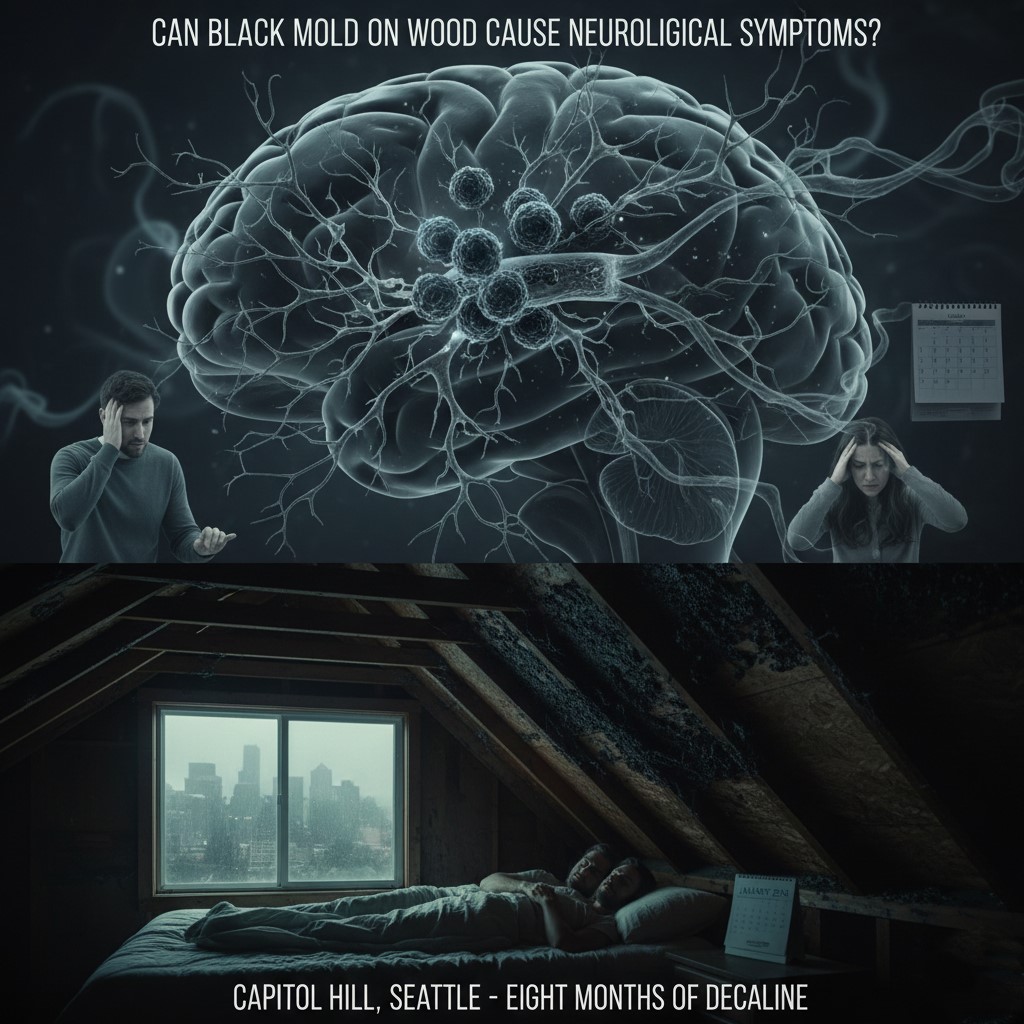
Can Black Mold on Wood Cause Neurological Symptoms?
Black mold (Stachybotrys chartarum) growing on wood surfaces produces trichothecene mycotoxins that cross the blood-brain barrier and directly damage neurons in the hippocampus, the brain region responsible for memory formation and spatial navigation. These neurotoxic compounds cause progressive cognitive impairment including brain fog, memory loss, chronic fatigue, persistent headaches, and executive function deficits that physicians frequently misdiagnose as depression, chronic fatigue syndrome, or early-onset dementia. The Centers for Disease Control and Prevention confirms that mycotoxin exposure from indoor mold can trigger neurological symptoms, respiratory issues, and immune system dysfunction.
Seattle, Portland, and coastal Pacific Northwest cities experience 150+ rainy days annually with average outdoor relative humidity ranging from 65-75% year-round—conditions that accelerate mold colonization on cellulose-rich materials like wood rafters, plywood sheathing, and unfinished beams. Mold germination begins within 24-48 hours when wood moisture content exceeds 15-20%. Older homes constructed between 1920-1970 in neighborhoods like Capitol Hill, Queen Anne, Laurelhurst, and Hawthorne frequently lack modern vapor barriers and adequate attic ventilation, making wood surfaces particularly vulnerable to sustained moisture exposure and subsequent fungal growth.
For eight months beginning June 2023, I experienced progressive cognitive decline that three physicians attributed to work stress, seasonal affective disorder, and potential thyroid dysfunction. Standard blood panels returned normal results. Neurological examination showed no abnormalities. By January 2024, I could barely maintain focus for thirty minutes, forgot appointments regularly, and experienced personality changes my partner described as "not yourself." The actual cause: a thirty-foot section of black mold colonization on the wood rafters directly above our bedroom in our Capitol Hill home, releasing mycotoxins we inhaled eight hours nightly.
The Neurological Symptoms No One Warns You About
Mycotoxin-induced neurological impairment follows a progressive timeline that most affected individuals fail to recognize as environmental exposure. Initial symptoms mimic common conditions like seasonal depression or work burnout, causing patients and physicians to pursue incorrect diagnoses while exposure continues unabated. Research published in the Journal of Occupational and Environmental Medicine demonstrates that chronic low-level mycotoxin exposure produces cumulative neurotoxic effects that worsen over months of continued inhalation.
June 2023 marked the onset with persistent fatigue despite adequate sleep duration. Nine hours of rest produced the sensation of sleep deprivation. Concentration at work deteriorated—routine tasks required unusual mental effort. Colleagues commented on my distraction during meetings. Low-grade headaches appeared several times weekly, localized behind the eyes. Nasal congestion developed without other cold symptoms. Each symptom individually seemed unremarkable; collectively, they indicated systemic dysfunction.
My supervisor noticed the changes before I acknowledged them. During a routine project update meeting, I lost track mid-presentation—stopped talking, couldn't recall my next point, stood confused for fifteen seconds before a colleague prompted me. After the meeting, my supervisor pulled me aside: "Are you feeling alright? That wasn't like you." I blamed poor sleep. The reality: mycotoxins were already affecting my prefrontal cortex function.
By August, cognitive impairment became undeniable. Mid-sentence, thoughts would dissolve entirely—not momentary lapses, but complete inability to recall what I had been saying. Scheduled appointments vanished from memory despite calendar entries. Walking into rooms, I would stand confused about my purpose there. Email comprehension suffered; reading the same paragraph three times failed to produce retention. Simple calculations that previously required seconds now demanded minutes of concentration.
The brain fog felt like wading through thick fluid. Every cognitive task—reading, planning, problem-solving—required exponentially more effort than normal. Conversations became exhausting. I would forget colleagues' names mid-conversation with them. Taking meeting notes proved impossible; by the time I wrote one sentence, I'd forgotten the next two points discussed.
October through November brought severe daily headaches unresponsive to over-the-counter analgesics, episodes of vertigo when standing, and disorientation in familiar locations—I became lost driving a route I had traveled hundreds of times. My GPS recalculated as I sat at an intersection near my home, unable to determine which direction led back. The panic that gripped me in that moment—realizing my spatial navigation had failed completely—remains visceral in memory.
Mood deterioration manifested as irritability, anxiety, and depression without identifiable triggers. Small frustrations produced disproportionate anger. My partner began walking on eggshells, uncertain what might trigger an outburst. Panic attacks emerged for the first time in my life—heart racing, shortness of breath, overwhelming dread without apparent cause. I attributed these to work stress and scheduled counseling appointments.
December represented functional crisis. Maintaining employment required maximum effort. Sick days increased to two per week. My employer initiated performance review procedures. Personality changes became pronounced enough that family members expressed serious concern. One evening, my best friend called—someone I've known for fifteen years. I answered, recognized the voice, but could not recall her name for the entire conversation. After hanging up, I sat on the couch crying while my partner held me.
"Something is physically wrong," my partner stated definitively. "This exceeds psychological stress. We need answers."

Why Doctors Miss the Mold Connection
Mycotoxin neurotoxicity presents with symptom patterns overlapping multiple common conditions, leading to frequent misdiagnosis. The National Institute of Environmental Health Sciences notes that healthcare providers rarely include environmental exposure assessment in standard diagnostic protocols for neurological or psychiatric symptoms. Standard laboratory tests—complete blood count, comprehensive metabolic panel, thyroid function—return normal results because mycotoxins do not produce detectable blood chemistry changes. Brain imaging reveals no structural abnormalities. Consequently, patients receive diagnoses of depression, generalized anxiety disorder, chronic fatigue syndrome, or fibromyalgia based on symptom presentation alone.
My first physician visit in July produced a depression screening questionnaire. My scores indicated moderate depression, prompting antidepressant prescription. I took the medication for six weeks without improvement—unsurprising, since neurotoxin exposure rather than serotonin deficiency caused my symptoms. The second physician in September ordered comprehensive blood work: complete metabolic panel, thyroid-stimulating hormone, vitamin D, vitamin B12. All results returned within normal ranges. "Probably chronic stress," he concluded. "Consider meditation and exercise."
The third consultation in November involved a neurologist following my disorientation episode. She conducted thorough neurological examination: cranial nerve function, reflexes, coordination, sensation, gait. Everything appeared normal. She ordered brain MRI to rule out structural lesions or early dementia. The MRI showed no abnormalities. Her assessment: "Your brain structure is completely normal. These symptoms likely represent anxiety manifestations. I recommend psychiatric consultation."
Not one physician asked about my home environment. Not one inquired about potential exposures. Not one considered that environmental toxins might produce neurological symptoms in an otherwise healthy adult. This represents standard medical practice—physicians receive minimal training in environmental medicine and rarely consider toxic exposures without obvious acute poisoning presentations.
The critical diagnostic indicator: symptom improvement during time away from the contaminated environment. Three-day trips visiting family in Portland produced noticeable cognitive clearing. Headaches diminished. Energy increased. Brain fog lifted partially. Within twelve hours of returning home, symptoms reasserted with full intensity. This pattern strongly suggests environmental causation rather than primary psychiatric or medical conditions. I mentioned this observation to my neurologist; she dismissed it as coincidental. "You probably just relax more on vacation."
The Mechanism: How Mycotoxins Damage the Brain
Trichothecene mycotoxins produced by Stachybotrys chartarum represent a class of compounds with well-documented neurotoxic properties. These molecules are small enough to cross the blood-brain barrier—the selective filtration system that normally protects neural tissue from circulating toxins. Once in brain tissue, trichothecenes inhibit protein synthesis at the ribosomal level, effectively preventing neurons from producing the proteins necessary for normal function and survival.
The hippocampus demonstrates particular vulnerability to trichothecene damage. This brain structure, critical for memory consolidation and spatial navigation, contains neurons with high metabolic rates and protein synthesis requirements. Disruption of protein synthesis preferentially affects these metabolically active regions. This explains why memory impairment and disorientation represent hallmark symptoms of chronic mycotoxin exposure.
Additionally, trichothecenes induce oxidative stress and inflammatory cascades within neural tissue. Microglia—the brain's immune cells—become activated, releasing inflammatory mediators that cause collateral damage to surrounding neurons. This neuroinflammation contributes to the headaches, fatigue, and mood disturbances observed in affected individuals.
Research using animal models demonstrates that chronic low-level trichothecene exposure produces measurable cognitive deficits, anxiety-like behaviors, and histological evidence of hippocampal damage. Human case reports of occupational mycotoxin exposure document similar symptom patterns: progressive cognitive impairment, memory deficits, mood changes, and in severe cases, permanent neurological damage.
The reassuring aspect: most individuals with exposure durations under two years show progressive recovery following exposure cessation. Neurons possess regenerative capability, particularly when damage hasn't progressed to cell death. My subsequent recovery confirmed this—once mycotoxin exposure ended, my cognitive function returned to baseline over approximately three months.
Living in the Pacific Northwest? Your Attic Is Probably Wet Right Now
Pacific Northwest atmospheric conditions create continuous moisture availability that sustains mold growth on wood surfaces year-round. Seattle averages 65% outdoor relative humidity, Portland 68%, Olympia 71%, and even inland Spokane maintains 44% despite reduced precipitation. More significantly, these regions experience 150+ rainy days annually, with 60% of precipitation concentrated between November and March. Marine air masses maintain elevated humidity levels even during periods without active precipitation.
The Pacific Ocean's influence extends well inland, particularly during fall and winter months. Marine layers move onshore regularly, bringing moisture-saturated air that penetrates residential structures. Even clear days feature elevated humidity as evaporation from the previous day's precipitation increases atmospheric moisture content. This persistent dampness distinguishes Pacific Northwest climate from other U.S. regions receiving comparable precipitation but with lower ambient humidity.
Interior attic spaces concentrate this moisture through multiple mechanisms. Poor ventilation traps humid air against wood surfaces. Temperature differentials between heated living spaces and unheated attics cause condensation on rafters and sheathing. Inadequate insulation allows warm moisture-laden air to rise into attics where it condenses on cooler wood surfaces. According to Washington State University Extension research on residential moisture control, attic relative humidity in inadequately ventilated Pacific Northwest homes regularly reaches 80-90% during winter months.
I measured our attic relative humidity in December 2023—weeks before discovering the mold—using a basic hygrometer. The reading showed 88% relative humidity. I remember thinking "that seems high" but didn't understand the implications. At 88% humidity, wood moisture content equilibrates to approximately 18-20%—well above the 15% threshold where mold growth becomes inevitable. Our attic provided ideal conditions for Stachybotrys colonization for months before I took that measurement.

Wood moisture content provides the critical determinant for mold growth potential. The Environmental Protection Agency states that mold requires moisture levels above 60% relative humidity or direct water contact for germination and growth. Wood maintains equilibrium moisture content corresponding to surrounding air humidity—at 80% relative humidity, wood moisture content reaches 16-18%, well above the 15% threshold where mold colonization begins. In Pacific Northwest attics lacking proper ventilation, wood surfaces remain perpetually in the moisture range supporting active fungal growth.
The vapor pressure gradient between warm, humid indoor air and cooler attic air drives moisture migration upward through ceiling penetrations. Light fixtures, exhaust fan housings, and attic access panels provide pathways for this moisture-laden air to enter attic spaces. Without adequate ventilation to exhaust this moisture, it accumulates on wood surfaces, condensing during cool nights and maintaining elevated moisture levels continuously.
Why Wood Rafters Serve as Perfect Mold Substrate
Mold requires three elements for colonization: moisture availability, organic nutrient source, and suitable temperature range. Unfinished wood rafters provide ideal conditions for all three requirements. Wood consists primarily of cellulose and lignin—complex carbohydrates that serve as primary nutrient sources for fungal metabolism. Unlike finished lumber with protective coatings, unfinished attic rafters expose porous wood grain directly to atmospheric moisture and airborne spore deposition.
Cellulose, the primary structural component of wood cell walls, contains linked glucose molecules that fungal enzymes can break down into simple sugars for metabolic energy. Stachybotrys chartarum demonstrates particular efficiency at cellulose digestion, allowing it to thrive on wood substrates that other mold species find less hospitable. The enzyme systems this organism employs can penetrate deep into wood grain, establishing mycelial networks that extend far beyond visible surface colonization.
Temperature ranges in Pacific Northwest attics fall within optimal parameters for Stachybotrys growth. Heat from living spaces rises into attics, maintaining temperatures between 50-80°F even during winter months—the temperature band where black mold demonstrates maximum growth rates. Unlike outdoor environments where temperature fluctuations inhibit consistent growth, attic spaces maintain relatively stable temperatures ideal for continuous colonization. During summer months, attic temperatures can exceed 120°F, but Stachybotrys demonstrates heat tolerance and survives these conditions in dormant states, resuming active growth when temperatures moderate.
Darkness in rarely-accessed attics eliminates UV radiation that would otherwise inhibit surface colonization. Sunlight's UV component damages fungal spores and mycelia, providing natural growth suppression on outdoor wood surfaces. Attic wood receives no UV exposure, eliminating this natural inhibitory factor. Dust accumulation on rafter surfaces provides additional organic material supporting initial spore germination before mycelia establish on the wood substrate itself.
North-facing roof sections experience particular vulnerability. These surfaces receive minimal direct solar heating, maintain lower temperatures, and dry more slowly following precipitation or condensation events. During site assessment of our attic, the professional inspector noted that 90% of visible colonization occurred on north-facing rafters while south-facing sections showed minimal growth despite identical ventilation conditions. The temperature differential—even a few degrees—proved sufficient to tip moisture balance from marginal to supportive of heavy colonization.
Our home's orientation placed our bedroom directly beneath the north-facing roof section where colonization concentrated most heavily. The irony: we chose this bedroom specifically because it stayed cooler in summer, not realizing that the same orientation promoting comfortable sleeping temperatures also created ideal conditions for mold growth in the attic above.
Older housing stock built before modern building science understanding of moisture management presents elevated risk. Homes constructed between 1920-1970 in established Seattle neighborhoods like Ballard, Fremont, and Wallingford frequently lack vapor barriers between living spaces and attics. These structures allow substantial moisture migration upward through ceiling penetrations. Many lack adequate soffit-to-ridge ventilation that would promote air circulation and moisture evacuation. Professional home inspectors in Seattle report finding inadequate attic ventilation in approximately 70% of pre-1970 residential structures.
Building codes have evolved substantially since our home's 1954 construction. Modern requirements mandate continuous vapor barriers, minimum insulation R-values, and specific ventilation ratios (typically one square foot of vent area per 150 square feet of attic space). Pre-1970 construction frequently features none of these elements. Our attic had perhaps 40% of the ventilation required by current code, no vapor barrier, and R-11 insulation where R-38 represents the current minimum. These deficiencies created the conditions enabling mold establishment and growth.
January 2024: Finding What Was Making Me Sick
November 2023 brought the first olfactory indication of hidden contamination. A musty odor appeared in the upstairs hallway—subtle initially, easily rationalized as typical Pacific Northwest dampness. "Every Seattle house smells a bit musty in winter," I told my partner, dismissing concern. We checked closets, bathroom cabinets, under sinks, behind furniture. Nothing visible suggested moisture problems.
My partner's sense of smell proved more acute than mine. "It's definitely stronger some days than others," they observed. "And it seems worst near the ceiling." I attributed this to air circulation patterns. The reality: spore release from the attic colony varied with humidity and temperature fluctuations, producing odor intensity variations.
By December, the odor intensified noticeably. Walking into our bedroom produced immediate olfactory impact. It concentrated near the ceiling below the attic access panel. My partner asked repeatedly: "When did you last inspect the attic?" I could not recall—likely not since purchasing the home three years prior. Home inspections at purchase had noted "adequate ventilation" and "no visible mold." Either the colonization hadn't yet established, or the inspector had missed early-stage growth.
January 15, 2024, marked the discovery. My partner had finally insisted: "Go check the attic. Something is wrong up there." I pulled down the attic ladder. Immediately upon opening the access panel, humid air carrying intense organic odor flowed downward. This exceeded normal attic smell—sharp, biological, the unmistakable scent of active organic decomposition. The odor reminded me of rotting vegetation in forest environments, but concentrated and confined.
Ascending into the attic with a flashlight revealed extensive black colonization covering approximately thirty linear feet of exposed rafters above our bedroom. The growth exhibited characteristic Stachybotrys appearance: dark black coloration with fuzzy texture in some areas, slimy wet appearance in others where condensation maintained surface moisture. Some patches appeared powdery and dry where spore production had matured. The contrast between affected rafters (dark black, textured, obviously abnormal) and clean rafters (natural wood color, smooth) demonstrated the colonization extent unmistakably.
Heaviest colonization occurred on rafter surfaces with minimal air exposure—the sides facing downward and the corners where rafters met roof sheathing. These protected locations accumulated the most moisture from condensation and experienced the least drying from air circulation. Some rafters showed colonization extending six inches from the peak concentration, gradually thinning toward areas with better air exposure.
Pressing fingers against affected wood revealed compromised structural integrity—the surface felt spongy rather than firm. A screwdriver pressed against heavily colonized wood penetrated easily, encountering soft material rather than solid wood. This indicated advanced degradation where fungal enzyme activity had broken down wood structure. Dark staining extended 2-3 inches beyond visible growth boundaries, indicating moisture penetration and likely sub-surface mycelial networks invisible at the surface.
Fiberglass insulation below the contaminated rafters showed visible dark discoloration from spore deposit and moisture drip. In several locations, insulation had become matted and compressed from moisture saturation—a condition rendering it thermally ineffective and providing additional substrate for mold growth.
The realization struck with immediate clarity: we had been sleeping directly beneath this colonization for months, inhaling spore releases and mycotoxin-laden air circulation through our HVAC system. Every symptom—cognitive impairment, fatigue, headaches, mood disturbance—aligned perfectly with known mycotoxin exposure effects. The timeline matched: symptoms began in June, suggesting colonization establishment around April or May following winter's moisture accumulation.
I descended from the attic, showed my partner photographs on my phone, and stated: "This is what's been making me sick. This is why I can't think straight."
I contacted a professional mold assessment service that afternoon. Research led me to a company licensed by the Washington State Department of Health with certified industrial hygienists on staff. Their emergency assessment line—(877) 360-5502—provided immediate scheduling for situations involving potential health hazards. The receptionist asked direct screening questions: extent of visible growth, duration of exposure, presence of health symptoms. Based on my responses, she scheduled assessment for the following morning, stating "given your symptoms and contamination description, we're treating this as priority."
Professional assessment seemed critical given the contamination extent and our ongoing neurological symptoms. While some homeowners attempt DIY assessment and remediation, the combination of toxic species (based on visual characteristics), extensive coverage, and documented health effects indicated need for professional expertise.
The Lab Results: It Was Worse Than We Thought
The certified industrial hygienist arrived January 16th at 9 AM with a white cargo van containing specialized equipment: thermal imaging camera, digital moisture meters with pin and non-invasive sensors, air sampling pumps with spore trap cassettes, surface sampling materials, and protective equipment. His systematic approach demonstrated the substantial difference between professional assessment and homeowner visual inspection.
Initial consultation at our kitchen table involved detailed health history review. He documented my symptom timeline, treatments attempted, medical consultations, and pattern of symptoms improving during absence from home and worsening upon return. "The pattern you describe—improvement away, worsening at home—represents one of the strongest indicators of indoor environmental exposure," he explained. "This suggests your symptoms result from something in your home environment, not primary medical or psychiatric conditions."

His attic assessment required ninety minutes. He photographed all visible colonization from multiple angles, establishing documentation of extent and appearance. Thermal imaging revealed temperature patterns indicating moisture presence—contaminated wood showed cooler temperatures than dry wood due to evaporative cooling from elevated moisture content. Some areas appeared wet that showed no visible growth, indicating moisture presence with colonization potentially just beginning or occurring below the surface.
Moisture meter readings throughout the affected attic area ranged from 22-24% wood moisture content in heavily colonized areas, down to 16-18% in areas with minimal visible growth. He tested multiple locations on both affected and clean rafters, creating a moisture map of the attic space. "Anything above 15% supports active growth," he stated while recording readings. "You're well into the range where colonization thrives. Even your 'clean' areas are right at the threshold—they would likely develop growth within months if moisture conditions persist."
Air quality sampling involved operating small pumps that drew precisely measured air volumes through spore trap cassettes at multiple locations: our bedroom directly below the contamination, the upstairs hallway, the living room downstairs, and outdoor reference sample. The outdoor sample provides baseline comparison—all homes contain some mold spores that enter through doors, windows, and ventilation. Elevated indoor counts compared to outdoor indicate indoor growth sources.
Surface sampling used sterile swabs to collect material from visible colonization for laboratory analysis. He selected samples from three locations showing different growth characteristics: heavy black fuzzy growth, slimy wet growth, and dry powdery appearance. Multiple sample types improve identification accuracy and detect mixed contamination where multiple species coexist.
The HVAC system required inspection because forced air systems distribute contaminants throughout structures. Opening our furnace revealed visible spore accumulation on the blower motor housing and internal surfaces. "Your system has been distributing spores throughout your home," he noted. "This explains why your bedroom shows elevated spore counts despite being separated from the attic by ceiling and insulation. Every time your furnace runs, it circulates contaminated air."
Following site assessment, he sat us down for preliminary findings discussion while we awaited laboratory results (requiring 3-5 days). "Based on visual characteristics, moisture readings, and growth patterns, you almost certainly have Stachybotrys chartarum with probable secondary species. The extent is significant—approximately thirty-five square feet of direct surface colonization, with moisture conditions suggesting additional colonization potential in areas currently showing early-stage or sub-surface growth."
Laboratory analysis received five days later confirmed his preliminary assessment. The detailed report documented:
Species Identification:
- Primary: Stachybotrys chartarum (confirmed through microscopic morphology and DNA sequencing)
- Secondary: Aspergillus species (multiple varieties including A. niger and A. versicolor)
- Trace amounts: Penicillium species
Air Quality Results:
- Outdoor reference: 180 spores per cubic meter (typical for Pacific Northwest winter conditions)
- Living room: 420 spores per cubic meter (2.3x outdoor)
- Upstairs hallway: 1,200 spores per cubic meter (6.7x outdoor)
- Master bedroom: 2,500 spores per cubic meter (13.9x outdoor)
The bedroom reading indicated severe contamination—more than thirteen times normal outdoor levels. The report noted: "Spore levels of this magnitude indicate active nearby growth source with efficient distribution mechanism (likely HVAC system). Occupants sleeping in this room experience sustained high-level exposure."
Moisture Assessment:
- Affected attic areas: 22-24% wood moisture content
- Marginally affected areas: 16-18% wood moisture content
- Recommended safe level: Below 15% wood moisture content
- Conclusion: "Current conditions support active growth and colonization expansion"
His detailed explanation of results provided context: "Stachybotrys chartarum produces trichothecene mycotoxins—these are neurotoxic compounds that cross the blood-brain barrier. The symptoms you've experienced—brain fog, memory impairment, cognitive dysfunction, headaches, mood changes—represent classic mycotoxin exposure presentations. Your exposure occurred through three routes: direct inhalation of spores and mycotoxin particles in your bedroom, systemic HVAC distribution throughout the home, and dermal contact with settled spores on surfaces."
The timeline assessment proved particularly illuminating: "Colony maturity analysis—examining hyphal development, spore production patterns, and substrate penetration depth—suggests colonization has been active for four to six months minimum. Given current growth extent, initial establishment likely occurred earlier, perhaps 8-10 months ago. This aligns with your June symptom onset. Small initial colonies probably established in April or May following winter moisture accumulation. By June, mycotoxin production reached levels producing detectable health effects."
His prognosis provided the first hopeful information I'd received in months: "The positive aspect: once you're no longer breathing these compounds, most individuals show progressive cognitive recovery over weeks to months. Trichothecene mycotoxins are metabolized and excreted—they don't accumulate permanently like some heavy metals. Your exposure duration, while significant, falls well short of the multi-year exposures that produce permanent neurological damage. Based on typical recovery patterns, you should expect substantial improvement within 4-6 weeks of exposure cessation, with complete recovery within 3-4 months."
He also addressed remediation requirements: "Given the extent, species toxicity, health effects, and HVAC involvement, professional remediation is strongly indicated. DIY attempts for contamination of this scope typically fail due to inadequate containment, incomplete treatment, and cross-contamination during remediation work. Professional services can complete this in 2-3 days with proper containment and verification testing. DIY would require weeks of work with substantial risk of making contamination worse through spore dispersal."
Is All Black Mold Toxic? And Other Questions I Had
Upon discovering extensive black growth in our attic, my immediate impulse involved containment rather than elimination: "Can we just seal it? Apply encapsulant paint over the surface?" This represents a common homeowner misconception about mold remediation that the inspector addressed directly.
"Painting or coating over active mold colonization seals living mycelium—the fungal root structure penetrating into wood fibers. The organism continues growing beneath the encapsulant, consuming cellulose, producing mycotoxins, and eventually breaking through the coating. Think of it like painting over termites—you're not solving the problem, just hiding it temporarily while it continues damaging your home and affecting your health."
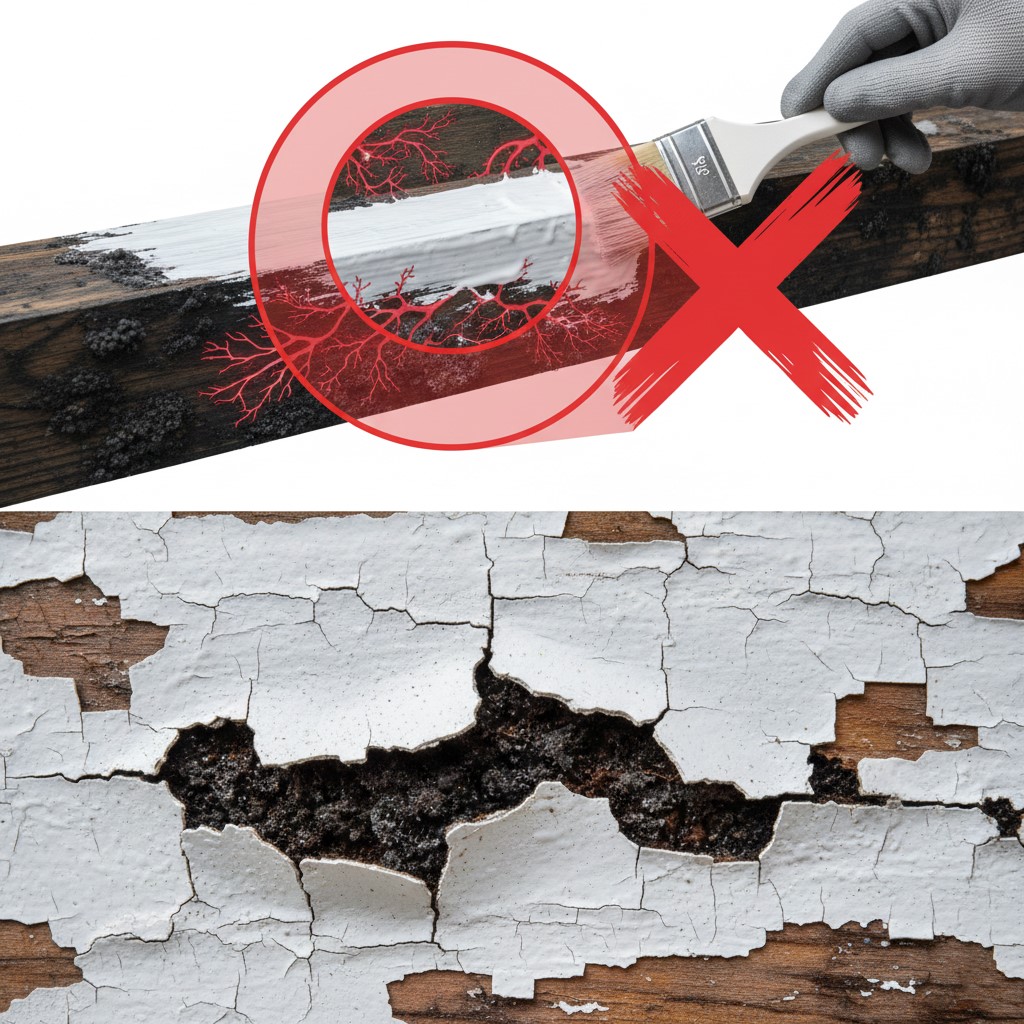
He showed me photographs from previous remediation projects where homeowners had attempted paint-over approaches. The images revealed bubbling, discolored encapsulant with breakthrough growth evident within 3-6 months. "We regularly encounter failed DIY attempts. Homeowners spend $200 on paint and supplies, work for days applying coatings, think they've solved the problem, then six months later discover worse contamination requiring complete remediation at greater cost than if they'd addressed it properly initially."
Effective treatment requires killing the organism at the mycelial level before applying any encapsulating products. This distinguishes cosmetic surface cleaning from legitimate remediation. Mycelium penetrates 1/4 to 1/2 inch into porous wood, far beyond surface discoloration. Treatments must penetrate to these depths to achieve organism death rather than temporary suppression.
Species Identification and Toxicity Concerns
The question "Is all black-colored mold toxic?" reflects reasonable concern but imprecise terminology. Multiple fungal species present dark coloration—Stachybotrys, Aspergillus niger, Cladosporium, Alternaria, and others. Not all produce significant mycotoxins, though all generate allergens and some individuals demonstrate sensitivity to any mold exposure regardless of species.
Stachybotrys chartarum specifically produces trichothecene mycotoxins that demonstrate documented neurotoxicity, immune suppression, and respiratory effects in controlled studies. Animal research and human case reports establish causative relationships between exposure and health effects. However, visual identification cannot confirm species identity. Dark, fuzzy growth could represent Stachybotrys or could indicate less toxic species. Only laboratory analysis through microscopic examination or DNA sequencing provides definitive identification.
The inspector explained the identification process: "Microscopic analysis examines spore morphology—size, shape, surface characteristics. Stachybotrys produces distinctive spores: dark, ellipsoidal, with roughened surfaces. Combined with growth characteristics on culture media and DNA sequencing, we can definitively identify species. This matters because it informs remediation approach and health risk assessment. Stachybotrys requires more aggressive containment and health precautions than less toxic species."
Our laboratory results confirmed mixed contamination: predominantly Stachybotrys chartarum with secondary Aspergillus presence. Both produce mycotoxins, though with different biochemical profiles and health effects. Stachybotrys trichothecenes cause primarily neurological and immune effects. Aspergillus produces aflatoxins (carcinogenic) and ochratoxins (kidney toxic). The mixed contamination meant we faced multiple mycotoxin exposures simultaneously.
This finding validated the decision for professional testing rather than proceeding with treatment based on visual assessment alone. Had we attempted DIY remediation without species identification, we wouldn't have understood the full health risk or implemented appropriate safety measures for toxic species handling.
For homeowners discovering suspected black mold, professional assessment and laboratory identification provides critical information for several reasons. First, it confirms whether toxic species are present, informing decisions about remediation urgency and approach. Second, it establishes baseline contamination levels useful for post-remediation verification—demonstrating successful treatment requires documented spore count reduction. Third, it provides documentation valuable for insurance claims if coverage applies. Fourth, it informs appropriate safety precautions during remediation for specific species involved.
The Washington State Department of Health recommends professional assessment for any mold contamination exceeding ten square feet, involvement of HVAC systems, presence of immunocompromised occupants, or situations where individuals experience health symptoms. Our situation met multiple criteria: thirty-five square feet contamination, HVAC involvement, and significant neurological symptoms.
Residents throughout the Pacific Northwest—from Tacoma to Spokane to Salem—should prioritize professional assessment over DIY remediation attempts for substantial contamination. The investment in proper identification ($300-500 typically) provides essential information for effective, safe remediation while documenting conditions for potential insurance claims or future property transactions.
The Iceberg Problem: What You See Is Only 10%
Visible mold growth represents the reproductive structure—analogous to mushrooms appearing above ground while extensive mycelial networks spread invisibly through soil. The fuzzy black surface growth consists of spore-producing structures; the actual organism exists as microscopic filaments called hyphae that penetrate deep into wood cellular structure. This mycelial network extracts nutrients from cellulose and lignin while producing the metabolic byproducts we recognize as mycotoxins.
Understanding this biological reality explains why surface cleaning approaches fail consistently. Applying bleach solutions, scrubbing visible growth, or wiping surfaces clean removes only the visible fruiting bodies. Mycelium remains alive within wood fibers, capable of producing new surface growth within days to weeks once conditions permit.
The inspector used a compelling demonstration during our consultation. He pressed a small tool—like a dental pick—into an area of heavy visible colonization on our rafters. The pick penetrated easily through surface growth, then continued penetrating into wood beneath, meeting resistance only after approximately 3/8 inch depth. He removed the pick, examined the tip, and showed us wood fibers clinging to it—partially degraded, darkly discolored fibers indicating mycelial penetration well below the visible surface.
"This is why surface cleaning fails," he explained. "The visible black growth you see represents perhaps 10-20% of the organism's actual extent. The remaining 80-90% exists as mycelium inside the wood. Surface cleaning removes what you see but leaves the organism alive and capable of regrowth."
He likened it to weeding a garden: "If you clip weeds at ground level, leaving roots intact, what happens? They regrow within days. Same principle with mold. You must kill the root structure—the mycelium—to prevent regrowth."
Why Bleach Doesn't Kill Mold on Wood
Household bleach solutions (typically 5-6% sodium hypochlorite) demonstrate effective antimicrobial properties on non-porous surfaces like tile, glass, or metal. However, bleach application on porous wood produces counterproductive results through multiple mechanisms that the inspector explained in detail.
"Bleach solutions consist of approximately 95% water and 5% active ingredient. When you spray bleach on porous wood, what happens? The wood absorbs liquid through capillary action—its cellular structure pulls moisture inward. But wood's porous nature creates selective absorption. The water component penetrates deeply, while the chlorine compound—which is ionic and reactive—tends to react with surface organic material and lose effectiveness before penetrating significantly."
The net result: increased moisture content in wood (feeding mold growth) with minimal antimicrobial effect on mycelium at depth. Surface discoloration may disappear as bleach oxidizes visible pigments, creating the appearance of successful treatment. Meanwhile, mycelium remains viable below the surface, continuing to produce enzymes that degrade wood structure and mycotoxins that affect air quality.
"Homeowners apply bleach, visible black color disappears, they think 'problem solved.' Two weeks later, dark spots reappear. They apply more bleach. Cycle continues. Meanwhile, they're adding moisture to wood with each application, actually promoting continued growth."
Additionally, bleach application on organic materials like wood produces rapid chemical breakdown of the active ingredient through a reaction called chlorine demand. Organic compounds in wood consume available chlorine through oxidation reactions, neutralizing the antimicrobial effect before achieving mycelial kill. This explains why bleach works well on inert surfaces like tile but fails on organic substrates like wood or drywall.
The Environmental Protection Agency's mold guidance specifically advises against bleach use for mold remediation on porous materials, stating that appropriate treatments must penetrate material depth where mycelium resides. EPA recommendations emphasize moisture control, physical removal of contaminated materials when contamination is extensive, and use of appropriate antimicrobial treatments designed for porous substrate penetration.
Effective wood treatment requires solutions with three characteristics: ability to penetrate porous structure through capillary action or vapor diffusion, antimicrobial activity specifically against fungal organisms, and ideally, residual activity that inhibits recolonization after treatment.
The Neurotoxin Factor and Safety Requirements
Stachybotrys mycotoxins retain toxicity independent of organism viability. Dead mold may no longer grow or reproduce, but dried spores and mycotoxin residues remain biologically active, capable of producing health effects when inhaled or contacted. This creates significant safety concerns during remediation work.
Disturbing contaminated surfaces during cleaning or remediation creates aerosols containing both viable spores and toxic particulates. Scrubbing produces mechanical force that fractures spore-bearing structures, releasing thousands of spores into the air. Removal of contaminated materials generates dust clouds containing spore fragments and mycotoxin particles. Without proper respiratory protection, DIY remediation attempts produce significant exposure risk—potentially exceeding the exposure that occurred during months of undisturbed colonization.
The inspector emphasized this point forcefully: "Your eight-month exposure occurred through relatively low-level, continuous inhalation—chronic low-dose exposure. If you attempt remediation without proper containment and respiratory protection, you create acute high-dose exposure that can produce immediate symptoms: severe headache, nausea, respiratory distress, dizziness. We've had homeowners end up in emergency rooms after DIY mold cleanup without adequate PPE."
Professional remediation standards require minimum N95 respirators for small-scale work and P100 respirators for extensive contamination. N95 respirators filter 95% of airborne particles down to 0.3 microns—adequate for spore filtration. P100 respirators filter 99.97% of particles—providing maximum protection for toxic species handling. Standard dust masks or surgical masks provide inadequate protection against sub-micron particles like mold spores and mycotoxin fragments that readily penetrate basic mask materials.
Additional safety equipment includes eye protection preventing conjunctival exposure (goggles that seal around eyes, not simply glasses), disposable protective clothing preventing transport of contamination from work areas into living spaces through clothing, and gloves protecting skin from direct contact with mycotoxin-laden materials.
Size thresholds for DIY versus professional remediation reflect both safety and effectiveness considerations. The EPA and CDC recommend professional remediation for contamination exceeding ten square feet, contamination in HVAC systems, presence of toxic species (particularly Stachybotrys), or situations involving individuals with respiratory conditions or compromised immune systems. Our thirty-five square feet of rafter contamination, combined with documented neurological effects and HVAC involvement, clearly indicated professional intervention necessity.
Even for contamination below ten square feet, individuals experiencing health symptoms should strongly consider professional treatment. "If mold has already made you sick, you're demonstrating susceptibility to mycotoxin effects. Disturbing that contamination without professional containment creates acute exposure that could worsen your symptoms substantially," the inspector advised.
Homeowners discovering suspected toxic mold should contact assessment services for professional evaluation rather than attempting immediate DIY remediation. Certified professionals can be reached at 877 360-5502 for rapid evaluation of contamination extent and professional guidance.
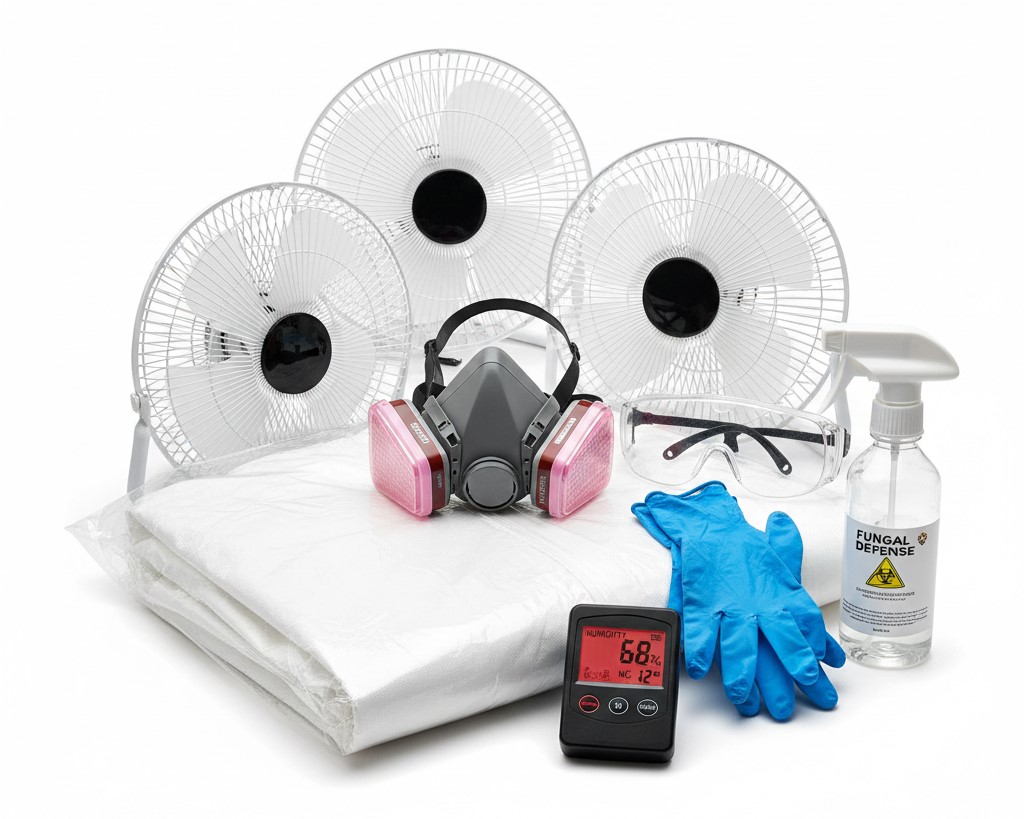
How We Treated a Small Test Area Before Calling Professionals
Before professional remediation, I wanted to understand the treatment process and evaluate whether DIY remediation might prove feasible for our situation. The inspector agreed that treating a small test area (approximately one square foot) with proper safety equipment would demonstrate treatment effectiveness while illustrating why larger-scale remediation requires professional capability.
"Many homeowners benefit from treating a small area themselves under guidance," he explained. "It provides education about what's involved, demonstrates the physical effort required, and usually convinces people that professional services represent the practical choice for significant contamination."
The test section selection involved identifying an accessible rafter location with moderate colonization but no apparent structural compromise. The inspector guided the selection: "Choose an area you can reach without awkward positions, with visible growth but not the heaviest contamination. This gives you realistic experience without maximum difficulty."
Safety equipment acquisition preceded any remediation work. I purchased P100 respirators (approximately $35 each, with replaceable cartridges), safety goggles that sealed around my eyes ($12), nitrile gloves rated for chemical resistance ($8 for box of fifty), and disposable Tyvek coveralls ($15). The total safety investment—about $70—exceeded my initial expectation but reflected minimum requirements for toxic species handling.
Setting up aggressive ventilation involved opening all attic vents and positioning two box fans at opposite ends of the attic space, creating cross-flow that would carry disturbed spores toward exhaust points rather than allowing them to settle on uncontaminated surfaces. An additional fan positioned at the attic access directed air upward, preventing spore-laden air from flowing down into our living space during work.
Treatment Solution Selection and Application
Research into wood-safe fungicidal treatments identified several options with documented effectiveness against mold mycelium penetrated into porous materials. Options included borax (sodium borate) solutions, distilled white vinegar, hydrogen peroxide, and commercial fungicidal products. Each presented different advantages and limitations.
Borax solution emerged as the optimal choice based on multiple factors: documented fungicidal activity through decades of use, excellent wood penetration capability due to water solubility and small molecular size, low toxicity to humans (commonly used in laundry products), residual activity inhibiting recolonization, and cost-effectiveness at approximately $6 for sufficient material to treat our entire contamination.
Borax (sodium borate) demonstrates antimicrobial activity through multiple mechanisms. Its alkaline pH—approximately 9.3 in solution—creates hostile conditions for mold survival, as most fungi prefer slightly acidic to neutral pH. More significantly, borates disrupt fungal cell membrane integrity through osmotic stress and interfere with metabolic enzymes essential for cellular function. Borax dissolved in water penetrates porous wood grain through capillary action, reaching mycelial depths where surface treatments fail. Residual borax remaining in wood after drying provides ongoing antifungal protection—fungi attempting to colonize borax-treated wood experience inhibited growth.
Preparation involved dissolving one cup (approximately 230 grams) of borax powder in one gallon hot water (approximately 130-140°F), producing roughly 8% concentration by weight. Hot water accelerates dissolution; borax dissolves slowly in cold water. Stirring until complete dissolution produced clear solution ready for application.
A pump sprayer—identical to garden spraying equipment—permitted pressurized application that enhanced penetration into wood grain compared to simple spray bottles or brush application. The two-gallon capacity sprayer ($15 from hardware store) held sufficient solution for treating our full contamination plus the test area.
Application protocol followed professional recommendations provided by the inspector. First, light water misting of the contaminated area wet the surface mold without creating streaming runoff. This critical safety step prevents spore release during subsequent disturbance. Dry mold produces maximum spore liberation when disturbed; dampened mold releases far fewer spores.
Second, generous borax solution application saturated the wood surface until visible absorption ceased and liquid began beading on the surface rather than soaking inward. I applied solution from approximately twelve inches distance, allowing spray pattern to cover surface evenly. The goal: deep penetration into wood grain carrying fungicide to mycelial depth.
Treatment sat for 2-3 minutes allowing maximum penetration depth before mechanical disturbance. During this dwelling time, I could observe the solution soaking into wood, darkening the surface as moisture content increased.
Third, gentle scrubbing with a soft-bristled brush (similar to a large dish brush) moved along wood grain direction rather than across grain, minimizing fiber damage. Cross-grain scrubbing can raise wood fibers creating roughened surface that actually increases surface area for future mold colonization. Along-grain scrubbing worked debris loose while preserving smooth wood surface.
The process generated moderate physical exertion given overhead working position. My arms fatigued quickly from reaching upward while applying pressure for scrubbing. After ten minutes of work on one square foot, I understood why full-scale DIY remediation spanning 35 square feet would require exceptional stamina and multiple work sessions to avoid exhaustion-related safety lapses.
Heavy colonization areas showing deep discoloration even after initial treatment required repeat application cycles. I applied borax solution a second time, allowed additional dwell time, and scrubbed again. Third application showed marginal additional improvement, suggesting I'd achieved maximum practical removal of visible contamination and treatment had penetrated to mycelial depth.
After completing treatment application and mechanical removal, the area required complete drying before effectiveness assessment. Rushed drying produces surface drying while interior moisture persists—defeating fungicidal treatment by maintaining mycelial viability at depth. The inspector had emphasized: "Patience during drying determines treatment success or failure. Wood must dry completely to below 15% moisture content. Rushing this step wastes all preceding effort."
Moisture Control and Verification
Wood moisture content determination provides essential verification of treatment success. A pin-type moisture meter—approximately $25-40 from home improvement retailers—measures electrical resistance between probe pins inserted into wood. Electrical resistance correlates inversely with moisture content: wet wood conducts electricity better than dry wood. The meter translates resistance measurements into moisture content percentage readings calibrated specifically for wood.
Post-treatment drying required three full days with multiple box fans directing continuous airflow across treated surfaces. Ambient attic temperature (approximately 60°F in January) slowed evaporation compared to warm summer conditions where drying might complete in 24-48 hours. I checked moisture levels twice daily, observing gradual decrease from immediate post-treatment readings of 28-30% (thoroughly wetted from solution application) down through intermediate levels to final readings of 13-14%—within the safe range below 15% that inhibits mold growth.
This drying duration exceeded my initial expectation substantially. I had naively assumed treating the full thirty-five square feet might require two days—one for treatment application, one for drying. The reality: drying alone consumed three days for one square foot. Extrapolating to full scope suggested treatment and drying would span two weeks minimum with multiple applications likely necessary for heavily colon