The Hidden Danger After Every Jersey Shore Storm: Saltwater Mold in Coastal Homes
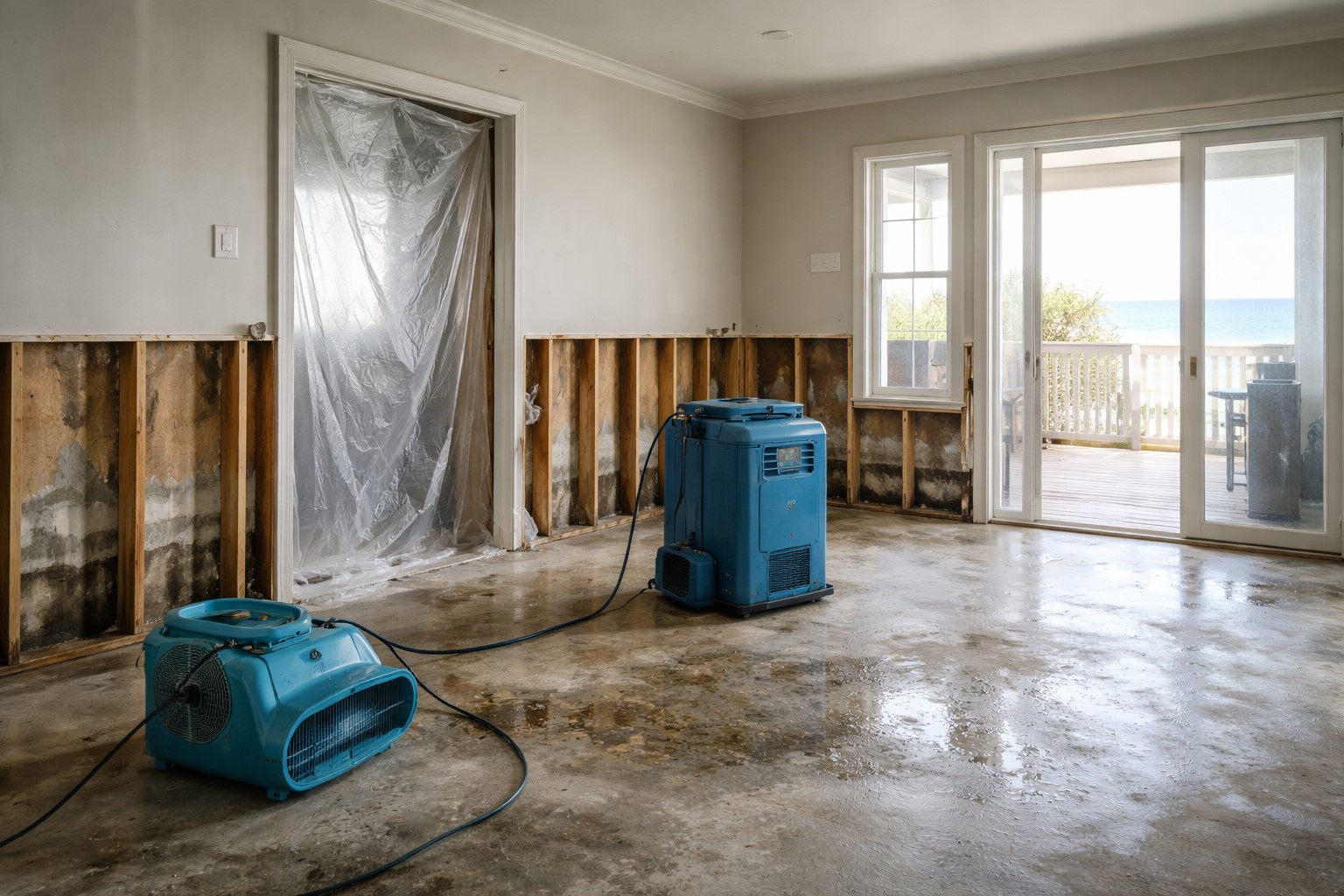
The storm passes. Floodwaters recede. You walk through your front door and survey the damage — waterlogged furniture, wet floors, a faint smell you attribute to dampness. The walls appear intact. The ceiling shows no staining. You think the worst is over and that thorough drying will handle the rest.
Key Takeaways
Critical Information for New Jersey Shore Homeowners:
- Saltwater mold is not ordinary flood damage: Salt absorbed into drywall, wood, and concrete draws moisture from air indefinitely — mold grows in walls that look and feel completely dry
- 48-hour critical window: Aspergillus begins colonizing within 24 hours; Stachybotrys chartarum (black mold) establishes on wet drywall within 48–72 hours after storm surge flooding
- Flush before you dry: Saltwater-flooded surfaces must be rinsed with fresh water before any drying begins — skipping this step concentrates salt deeper into materials and guarantees mold recurrence
- Crawl space and vacation homes carry the highest risk: Unheated, unoccupied shore homes flooded in winter can develop mold throughout the structure for 3–5 months before owners return in spring
- Delayed response costs $6,000+: Professional mold remediation in New Jersey averages $6,000 for moderate flooding — early response prevents structural remediation costs that multiply significantly with delay
- Standard homeowners insurance excludes storm surge: Coastal flood damage requires a separate NFIP flood insurance policy — and both programs require documented proof of immediate mitigation action
- Emergency response available 24/7: Call (877) 360-5502 for immediate inspection and remediation in Atlantic City, Brigantine, Asbury Park, Long Branch, Toms River, Point Pleasant Beach, Wildwood, Cape May, and throughout Monmouth, Ocean, and Cape May Counties
🚨 FLOODWATER IN YOUR HOME RIGHT NOW?
DO THESE 3 THINGS IMMEDIATELY:
- ELECTRICAL SAFETY FIRST: If there is standing water and you can shut off power from a dry location, turn off power at the main breaker. If you must step into water to reach the panel, do not attempt it—call an electrician.
- VENTILATE & START DAMAGE CONTROL (IF SAFE): Open doors/windows if conditions allow, and remove/relocate items from wet areas. The goal is to begin drying and prevent mold growth within 24–48 hours.
- CALL MOLD REMEDIATION: (877) 360-5502 — serving the New Jersey Shore including Atlantic City, Brigantine, Asbury Park, Long Branch, Toms River, Point Pleasant Beach, Wildwood, Cape May.
That assumption has cost New Jersey Shore homeowners hundreds of millions of dollars in remediation costs and, in documented cases, serious long-term health consequences.
The real danger after every Jersey Shore storm isn't the flooding itself — it's what storm surge saltwater leaves embedded in your home's structure. Unlike freshwater flooding, saltwater damage initiates a chemical process that continues long after the water is gone. Salt absorbed into drywall, wood framing, and concrete actively draws moisture from the surrounding air for weeks, sustaining the humid conditions that mold requires to grow. Colonies establish behind walls, beneath subfloors, and inside crawl spaces while the visible surfaces of your home look completely normal.
After Superstorm Sandy, the New Jersey Department of Environmental Protection documented that conditions created by storm surge — power loss, failed HVAC systems, trapped moisture in sealed structures — were ideal for widespread mold and bacterial growth. Inspectors examining homes before renovation found visible mold on structural wooden elements in virtually every property once drywall was removed. After Hurricane Ida in 2021, homeowners who believed they had contained the damage discovered mold colonies weeks later — in closets, behind baseboards, and inside insulation — despite having dried surfaces promptly.
This pattern repeats after every major nor'easter to strike the Jersey Shore. Understanding why requires understanding what saltwater actually does to a coastal home.
Why Jersey Shore Gets Flooded Every Winter — Not Just Once in a Generation
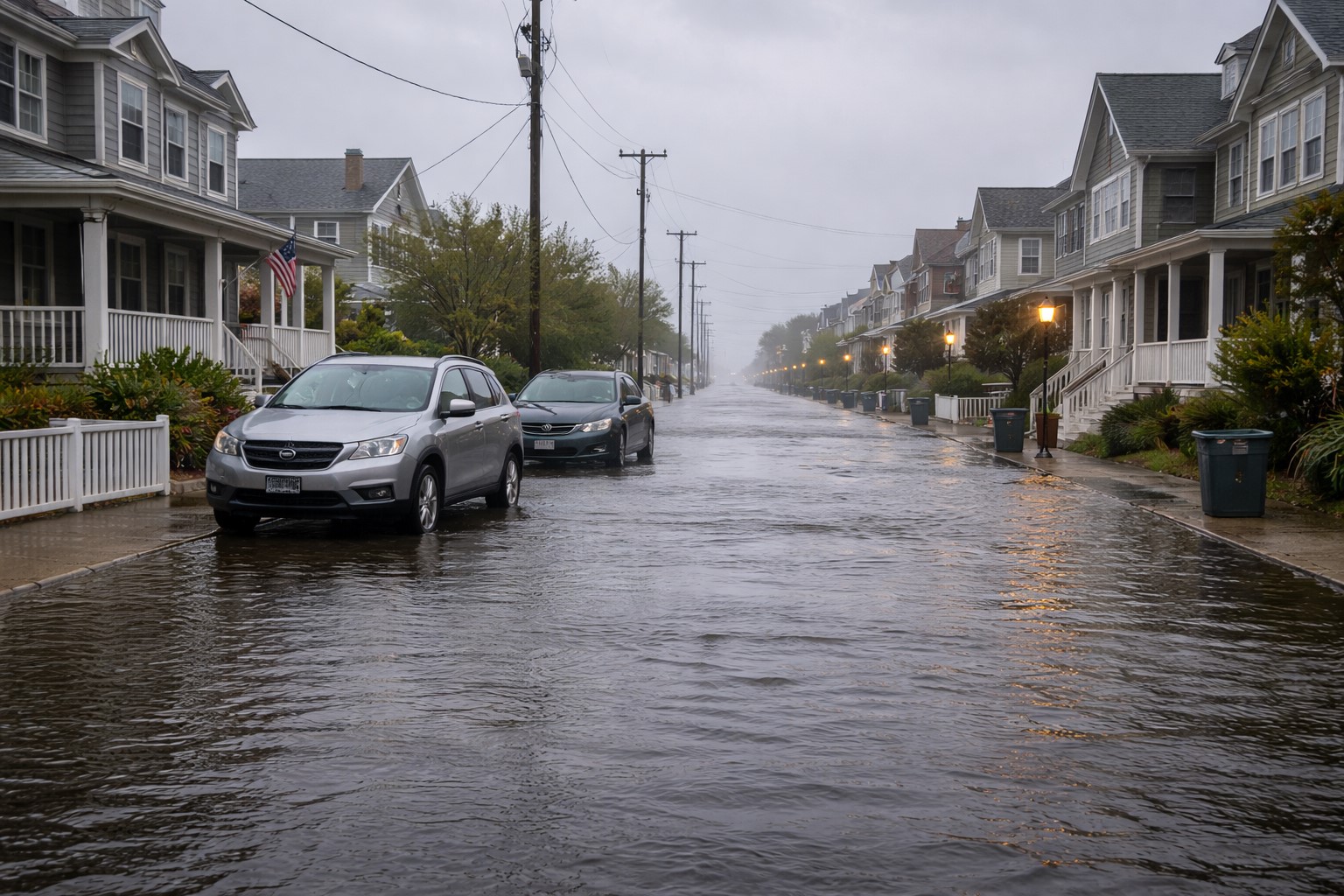
Storm surge flooding on the Jersey Shore results from a convergence of atmospheric and oceanographic forces that nor'easters reliably produce. Strong northeast winds drive Atlantic Ocean water toward the coast through a process called Ekman transport, while the storm's low atmospheric pressure physically raises sea level — each 1 millibar of pressure drop lifts the ocean surface approximately half an inch. When this surge coincides with astronomical high tide, coastal communities face flooding that can reach 2 to 4 feet above normal within hours, with little warning for homeowners to move belongings or initiate protective measures.
New Jersey's documented history of billion-dollar storm events underscores that this is not a rare occurrence:
- Superstorm Sandy (2012) — approximately $30 billion in damage statewide, the costliest disaster in New Jersey history
- Hurricane Ida (2021) — approximately $2 billion in damage, 29 deaths in New Jersey, with widespread mold outbreaks documented months after initial flooding
- Hurricane Irene (2011) — approximately $1 billion in damage, over 200,000 homes affected
- December nor'easter (1992) — $750 million in damage, 3,200 homes damaged in Monmouth and Ocean Counties alone
What amplifies the risk of each successive storm is accelerating sea level rise. The ocean along the New Jersey coastline has risen approximately one foot since 1900, according to NOAA tide gauge data. A storm that caused limited flooding three decades ago now pushes water significantly deeper into residential structures, foundation systems, and crawl spaces. Projections from the New Jersey Department of Environmental Protection indicate continued acceleration through mid-century.
Communities across the entire Shore corridor face this compounding risk: Atlantic City, Brigantine, Ventnor, Margate, Asbury Park, Long Branch, Sea Bright, Belmar, Manasquan, Point Pleasant Beach, Toms River, Wildwood, Cape May, and Sea Isle City all sit within low-elevation coastal zones where storm surge reaches residential structures during moderate to major nor'easters.
Saltwater Is Not Just "Wet" — It's a Fundamentally Different Kind of Damage
Saltwater flooding initiates a set of chemical and biological processes that distinguish it categorically from freshwater damage. Standard flood response protocols — dry quickly, remove wet materials, disinfect surfaces — address freshwater contamination adequately but fail to neutralize the mechanisms that make saltwater intrusion chronically damaging.
Three primary mechanisms create prolonged mold risk after saltwater flooding:
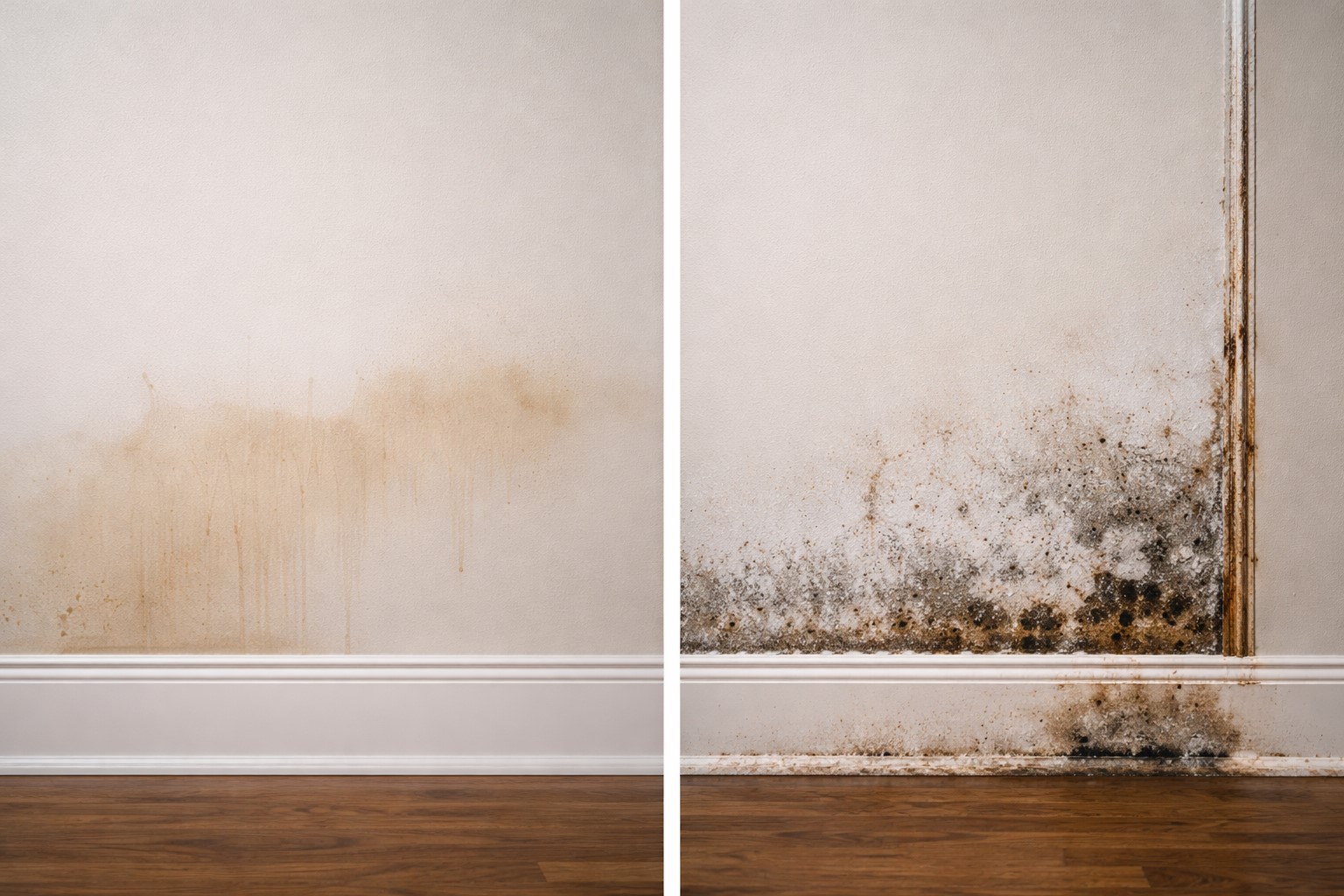
Hygroscopic salt retention. Salt dissolved in floodwater does not evaporate with the water. It absorbs into gypsum board, wood framing, concrete, insulation, and porous masonry. Once embedded, salt is hygroscopic — it continuously draws moisture from ambient air even after surfaces appear and feel completely dry. A wall that passes a visual and tactile inspection may contain salt-saturated drywall maintaining sufficient moisture content to sustain active mold growth. This process continues indefinitely without physical removal of salt-contaminated materials or thorough fresh water flushing.
Structural material degradation. Saltwater exposure causes rapid deterioration of building materials at the molecular level. Gypsum board and plaster begin dissolving within days. Wood framing develops micro-fractures and surface erosion. Concrete and cinder block foundations subjected to repeated saltwater contact experience progressive deterioration within weeks, according to research from the Federal Emergency Management Agency (FEMA). These structural voids and fractures create concealed environments where mold establishes deep root systems inaccessible to surface cleaning methods.
Organic nutrient loading. Ocean floodwater carries significant concentrations of organic particulates, marine sediment, sewage contamination from overwhelmed municipal systems, and biological material from coastal wetlands and ecosystems. These compounds provide nutrient sources that accelerate mold colony formation substantially beyond what freshwater flooding typically produces. Properties flooded with brackish or saltwater consistently show faster and more extensive mold growth than comparable properties flooded with clean freshwater.
The electrical system presents an additional critical consideration. Unlike freshwater damage — where wiring can sometimes be dried, tested, and returned to service — saltwater corrodes copper conductors, terminal connections, and electrical panel components at a rate that makes remediation inadvisable. The National Fire Protection Association (NFPA) guidelines indicate that electrical components exposed to saltwater flooding require complete replacement, not testing and reuse. Insurance adjusters and licensed electricians consistently document this finding after Jersey Shore storm events.
| Freshwater Flooding | Saltwater Storm Surge | |
|---|---|---|
| Material drying time | 48–72 hours with equipment | Weeks — salt continues drawing moisture |
| Mold risk profile | High if not dried within 48 hrs | Chronic — persists after apparent drying |
| Drywall outcome | Remove if wet 48+ hours | Remove and flush — cannot be salvaged |
| Wood framing | Dry and treat if caught early | Flush, treat, or replace depending on exposure |
| Electrical system | Dry and test | Complete replacement required |
| Foundation impact | Swelling, temporary warping | Progressive erosion, cracking, long-term instability |
| Remediation protocol | Dry → disinfect | Flush with fresh water → dry → disinfect |
The single most critical step that most homeowners omit: saltwater-flooded surfaces must be flushed with fresh water before any drying equipment is activated. Running dehumidifiers and air movers over saltwater-saturated materials without prior flushing drives salt deeper into the material matrix and concentrates it at depth, ensuring that mold-supporting moisture conditions persist regardless of surface dryness.
The Shore Homes Most Vulnerable to Saltwater Mold
Structural and occupancy characteristics specific to Jersey Shore housing create conditions where saltwater mold establishes quickly, spreads through concealed pathways, and survives for months without triggering visible warning signs. Four categories of Shore construction carry distinctly elevated risk.
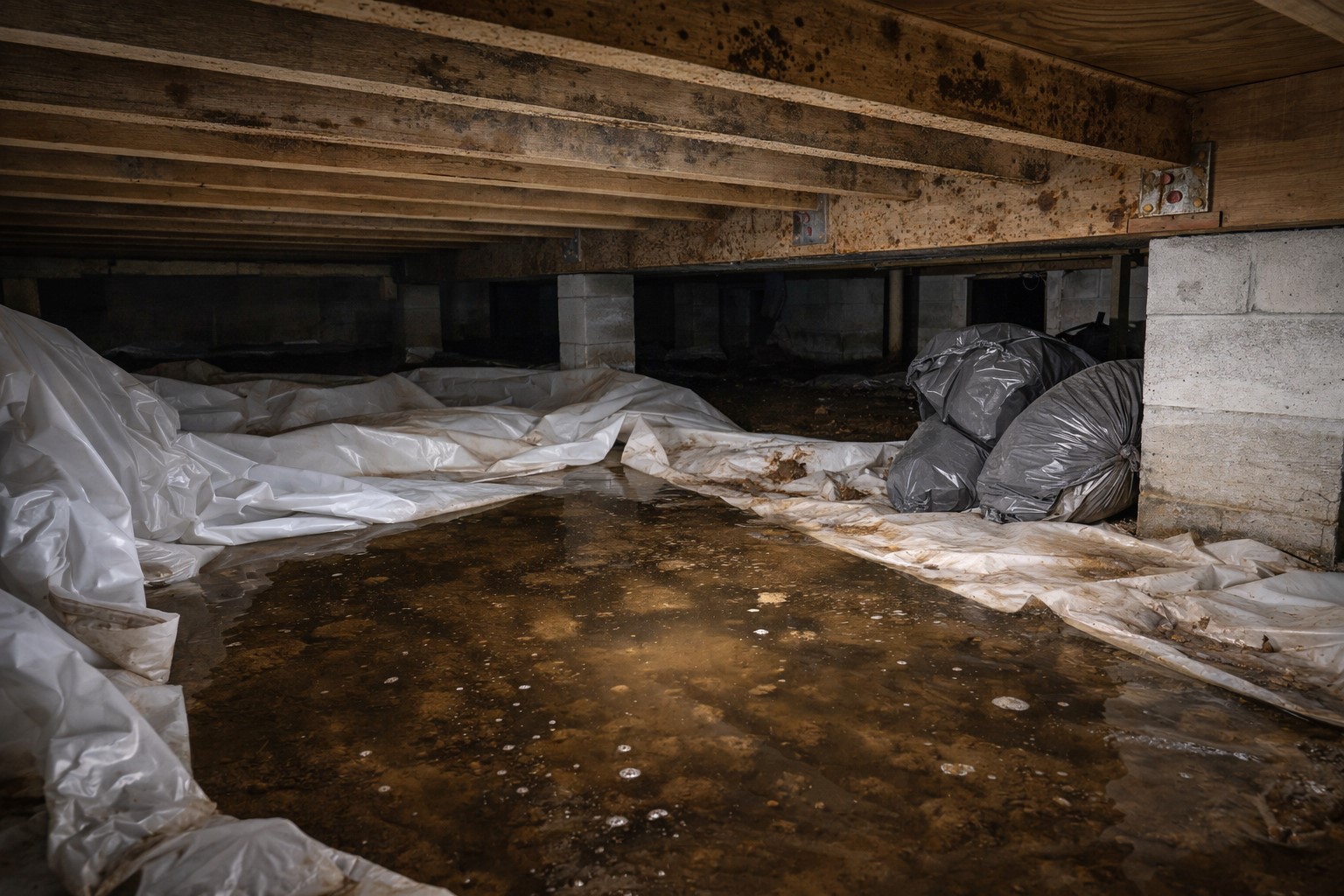
Crawl space homes represent the highest-risk structural category for saltwater mold on the Jersey Shore. The majority of traditional shore homes — particularly pre-1990 construction in Monmouth, Ocean, and Cape May Counties — are built over crawl spaces with exposed dirt floors. During storm surge events, saltwater floods directly into this sub-structure, saturating soil and soaking wooden floor joists, beams, and subfloor sheathing from below. The stack effect — the tendency of air to move upward through a structure from lower pressure zones — then draws moisture-laden air from the crawl space into the living area above through gaps in the subfloor assembly.
Saltwater intrusion in crawl spaces creates compounding damage: elevated mold growth on structural wood, accelerated wood rot, corrosion of electrical conduit and plumbing fixtures, and increased soil salinity that further destabilizes foundation footings, according to Jersey Shore crawlspace specialist. Without proper vapor barrier installation and mechanical drying, saltwater-flooded crawl spaces maintain humidity levels above 80% for months after initial flooding — well above the 50% threshold below which most mold species cannot sustain growth.
Seasonal and vacation homes face a pattern of delayed damage discovery that consistently produces the most severe mold outcomes. A substantial proportion of Jersey Shore properties are occupied primarily in summer months and left unheated and unmonitored from October through April or May. When a nor'easter floods an unoccupied shore house in winter, the damage goes undetected. With no heating system running and no occupants to ventilate the structure, interior humidity climbs to 80–90% in closed coastal buildings during winter months. Mold growth proceeds without competition or interruption. By the time owners return in spring, colonies that initiated on wet drywall in February have had three to five months of continuous growth — colonizing wall cavities, HVAC ductwork, attic rafters, and insulation throughout the structure.
Pre-1980 construction presents vulnerabilities not present in code-compliant contemporary builds. Homes constructed before modern moisture management standards were incorporated into New Jersey building codes lack moisture barriers in wall assemblies, vapor retarders under slabs and crawl spaces, and pressure-treated lumber in ground-contact framing members. The drywall in these homes — often standard gypsum board without moisture-resistant facing — absorbs saltwater immediately and completely. There is no viable drying path for saltwater-saturated standard drywall: the material must be removed.
Pile and pier foundation homes — now required by New Jersey building code in designated flood zones under ASCE 7 standards — elevate living spaces above projected base flood elevation. However, the open space beneath these structures is continuously exposed to coastal air, maintaining elevated ambient humidity year-round. Following storm surge events, saltwater pools in this open underbelly, soaking into any wood or insulation contacting the lower structural assembly and providing persistent moisture that migrates upward through the floor system via capillary action and the stack effect.
Atlantic County communities — including Ventnor City, Margate City, and Egg Harbor Township in addition to Atlantic City and Brigantine — experience particularly acute coastal airflow-driven mold problems, with properties within one to two miles of the coast showing mold first in unventilated attics, crawl spaces, wood framing adjacent to windows and exterior doors, and uninsulated garage assemblies.
The 48-Hour Window — Why Time Is the Only Thing That Matters
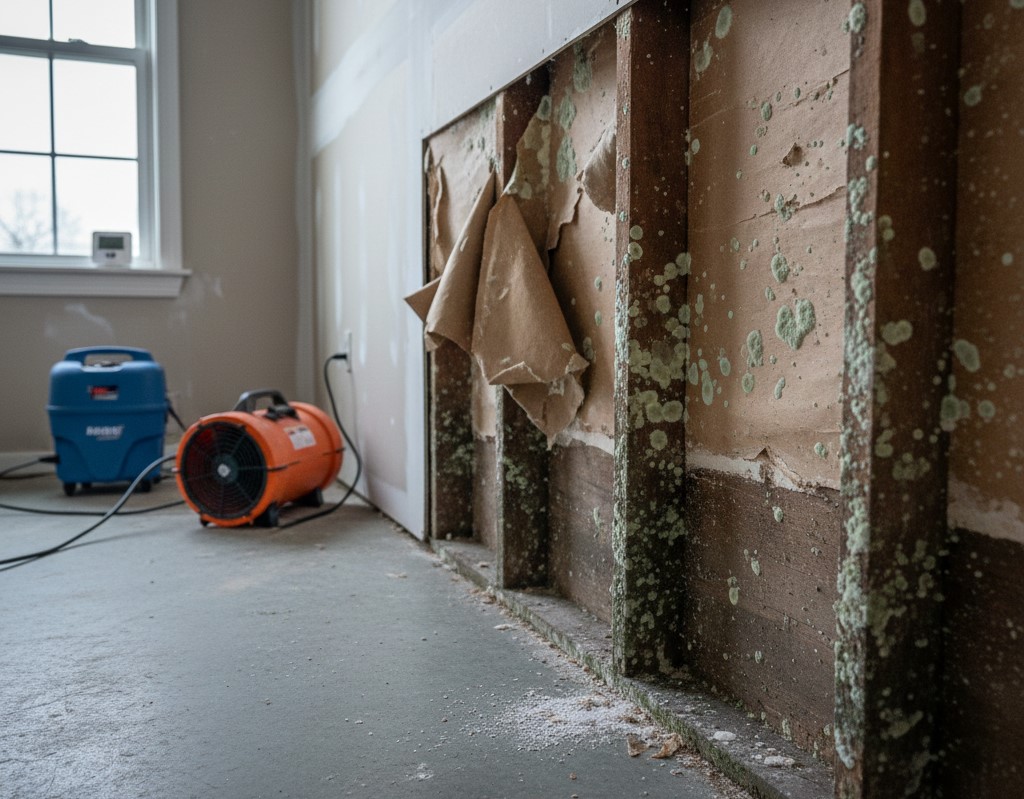
Mold growth following saltwater flooding does not follow the gradual timeline that most homeowners assume. Under the conditions created by storm surge — saturated building materials, elevated humidity in sealed structures, failed heating and ventilation systems — active mold colonization begins within 24 to 48 hours of initial flooding.
Aspergillus and Penicillium species, the most prevalent post-flood molds in New Jersey coastal properties, initiate spore germination on porous surfaces at relative humidity above 78% — a threshold that saltwater-flooded shore homes reach immediately and maintain through hygroscopic salt retention. Stachybotrys chartarum, commonly called black mold, specifically targets water-saturated cellulose substrates including drywall paper facing and untreated wood. Stachybotrys establishes visible colonies within 48 to 72 hours of sustained saturation, but mycotoxin production at the microscopic level begins before surface colonies become visible to the naked eye.
Mike Van Dyke, an industrial hygienist at the Colorado School of Public Health who has studied mold exposure following flood events, describes the practical consequence of delayed response: "If we get the house dried out in 24 to 48 hours, there's a lot less chance of a long-term problem. You have these homes where people can't get in them for a long time, so by the time they come back to the home, even three or four days later, that house is pretty well overgrown with mold."
Three days — the span between a manageable drying project and a full structural remediation.
During winter nor'easters, the 48-hour window is routinely lost through no fault of homeowners. Power outages disable heating systems, air handlers, and dehumidifiers simultaneously. Road closures and mandatory evacuations prevent re-entry. Emergency utility restoration takes priority over individual property access. The result is that Shore homes frequently sit closed, unheated, and saltwater-saturated for 5 to 7 days before owners can return — well past the biological threshold at which remediation replaces drying as the necessary response.
There is also a significant financial dimension to this window. New Jersey homeowners insurance policies and FEMA Individual Assistance programs require documentation that property owners took immediate and reasonable mitigation action following damage discovery. Homeowners who delay response — even due to legitimate circumstances such as mandatory evacuation orders or road closures — may face partial or complete claim denial on grounds of failure to mitigate. Documenting the reasons for any delay, including official evacuation orders and utility restoration timelines, is essential to preserving claim eligibility.
If your Shore property was flooded, contact (877) 360-5502 immediately — before beginning any cleanup or disposal of damaged materials.
What New Jersey Homeowners Discovered After the Storm Was Gone
The documented outcomes of saltwater flooding in New Jersey coastal properties consistently follow a pattern: initial cleanup appears successful, occupants return to apparently normal conditions, and then weeks or months later the hidden damage makes itself known through odor, visible mold growth, and health symptoms.
Charlene Dionio, a nurse from Dumont in Bergen County, did not anticipate significant flooding from Hurricane Ida — her home sits on elevated ground. The basement flooded regardless. She cleaned visible water damage, removed saturated materials, and believed the situation was resolved. Weeks later, opening a closet revealed black mold climbing the wall. Her daughter developed allergic symptoms. Her father — elderly, with diagnosed COPD and dementia — was hospitalized for three days unable to breathe adequately. "When he's exposed, when he inhales it, with his age and his condition, it will just balloon or mushroom into something that he cannot tolerate," Dionio told Climate Central.
Alyssa Geibel, also of Bridgewater, followed standard post-flood guidance after Ida — removing carpet within hours of flooding, ventilating the space, drying surfaces promptly. The mold developed regardless. Total remediation cost: approximately $6,000 for a modest basement space.
Joan Bennett, a fungal geneticist at Rutgers University's Department of Plant Pathology who began researching indoor mold after her own New Orleans home was inundated by Hurricane Katrina, provides the scientific context for these outcomes: "There's a saying among those of us who work with mold — 'just add water.' There are so many mold spores in the air that basically when things get wet — almost anything, paper, rugs, food — it's likely that mold will grow."
After Sandy, the phenomenon informally termed "Sandy Lung" — a constellation of respiratory symptoms affecting residents who returned to insufficiently dried homes — was documented by New Jersey health authorities and academic researchers. Studies published through NCBI documented significant respiratory health impacts among New Jersey residents in the months following Sandy, with mold exposure identified as a primary contributing factor in coastal communities.
These are not exceptional outcomes attributable to unusual circumstances. They are the predictable consequences of saltwater flooding when the biological response window closes before effective drying is achieved.
Who Is Most Vulnerable — Health Risks You Cannot Ignore
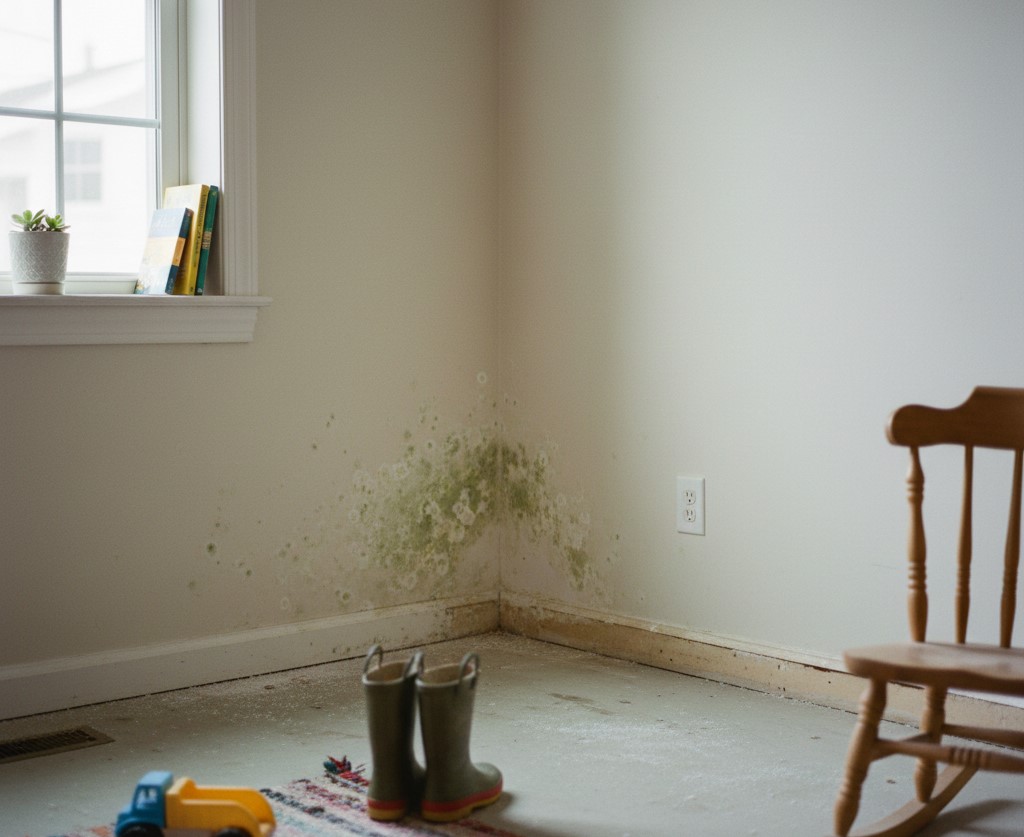
Mold exposure following coastal flooding produces health effects across the general population, but the severity and clinical significance of those effects differ substantially based on individual risk factors. The Centers for Disease Control and Prevention (CDC) and New Jersey Department of Health both identify specific populations for whom mold exposure after flooding constitutes a serious medical concern.
Populations at elevated health risk include:
- Children under 5 — developing immune systems cannot mount effective responses to mycotoxin exposure; early and sustained mold exposure correlates with increased lifetime asthma incidence and allergic sensitization
- Adults 65 and older — particularly those with COPD, coronary artery disease, or cognitive impairment, whose respiratory reserve is insufficient to compensate for airway inflammation caused by mold exposure
- Pregnant women — mycotoxin exposure during pregnancy carries documented developmental risks; the EPA advises that pregnant women avoid mold-contaminated environments entirely
- Individuals with asthma or allergic rhinitis — storm-related mold spore releases produce significant symptom escalation even in well-managed patients; the American Lung Association identifies mold as a primary indoor asthma trigger
- Immunocompromised individuals — including chemotherapy patients, organ transplant recipients, and those on immunosuppressive medications, for whom Aspergillus exposure can produce invasive pulmonary aspergillosis, a potentially life-threatening condition
Common symptoms of mold exposure in otherwise healthy adults include persistent cough, wheezing, nasal congestion, throat irritation, eye irritation, and skin rash. Stachybotrys chartarum exposure specifically — the species that dominates saltwater-saturated drywall after 48 to 72 hours — produces trichothecene mycotoxins associated with neurological symptoms including cognitive impairment, chronic fatigue, and memory difficulties in individuals with sustained high-level exposure.
The New Jersey Department of Health advises that if building materials remained wet for more than 48 hours, mold contamination should be assumed present regardless of visible evidence. Porous materials — carpet, padding, standard drywall, fiberglass batt insulation — that absorbed floodwater are classified as unrestorable and should be removed rather than cleaned or dried in place.
If any household member is experiencing respiratory symptoms, persistent cough, unexplained fatigue, or cognitive changes following storm flooding, contact a physician and call (877) 360-5502 for professional air quality assessment before symptoms progress.
What To Do Right Now — Step-by-Step After Coastal Flooding
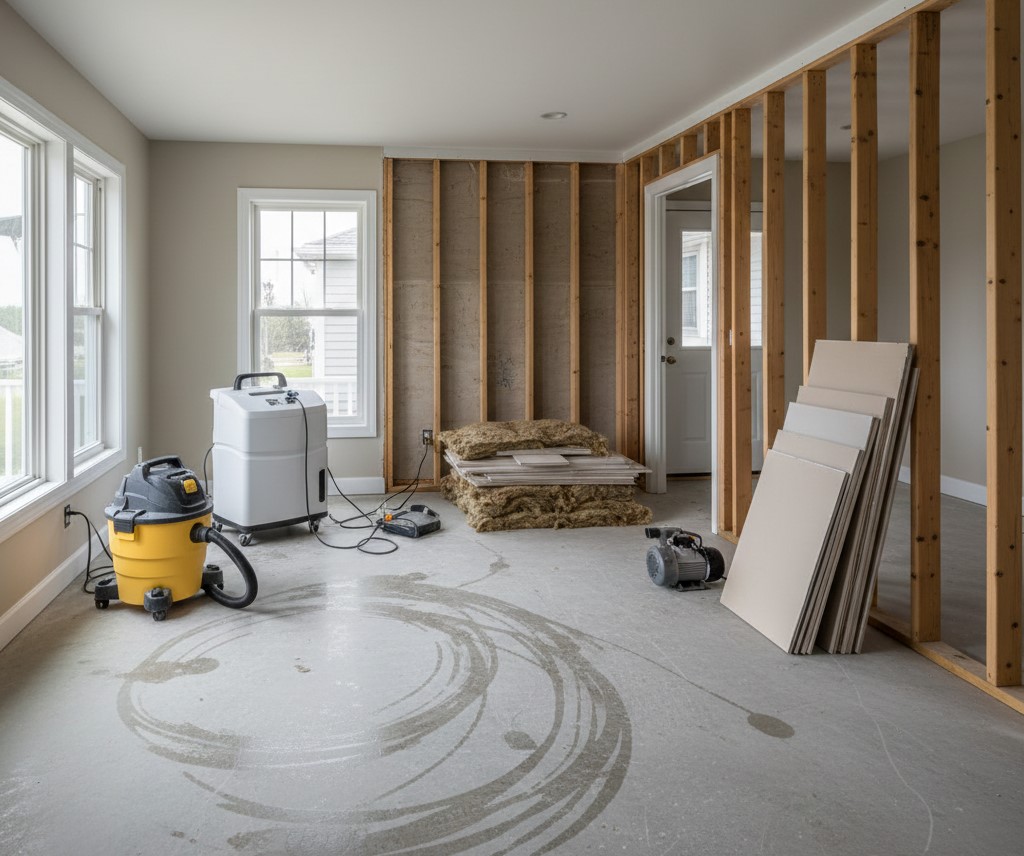
The following protocol applies specifically to saltwater storm surge flooding. It differs from standard freshwater flood response in critical ways — most importantly, the mandatory fresh water flushing step that must precede any mechanical drying.
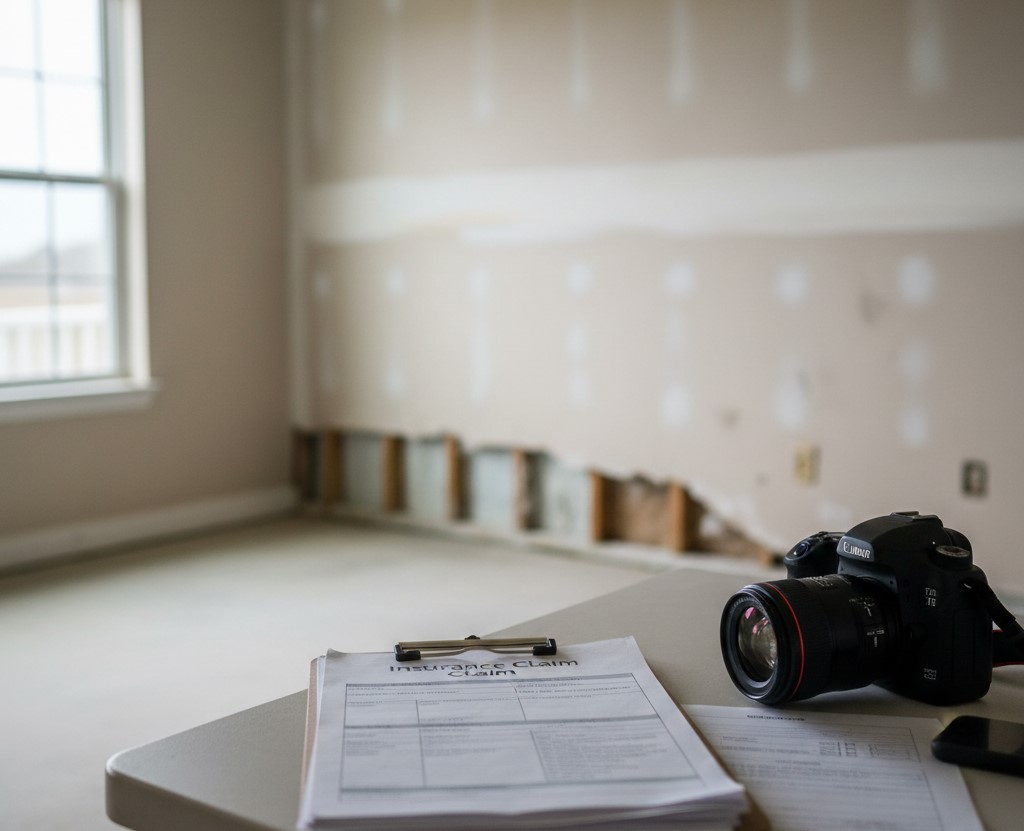
Step 1: Document all damage before touching anything. Photograph and video every affected area, including water lines on walls, damaged materials, and the crawl space if safely accessible. This documentation is required for insurance claims, FEMA applications, and potential legal proceedings. Photograph serial numbers on damaged appliances and HVAC components. Do not discard any damaged materials until your insurance adjuster has completed an inspection.
Step 2: Flush saltwater surfaces with fresh water. Before activating any fans, dehumidifiers, or air movers, rinse all flooded surfaces — walls, concrete floors, foundation walls, framing — with fresh water. This step removes surface salt deposits and reduces salt concentration in the outer layer of porous materials. Without this step, mechanical drying concentrates salt at depth within building materials, perpetuating hygroscopic moisture absorption indefinitely. This is the step most commonly omitted and the primary reason for mold recurrence after apparent successful drying.
Step 3: Extract all standing water. Use a submersible pump for significant water depths, then a wet/dry vacuum for residual water. Inspect the crawl space — saltwater can pool beneath the structure and remain standing for days after living area water has been removed.
Step 4: Remove all porous materials in contact with saltwater. Standard protocol requires removal of drywall to a minimum of 12 inches above the visible water line. In saltwater flooding, capillary action and hygroscopic salt migration frequently justify removal to 24 inches or higher, depending on water depth and material exposure duration. Carpet, carpet padding, fiberglass batt insulation, and acoustic ceiling tiles that contacted floodwater cannot be effectively decontaminated — they require removal and disposal per EPA mold remediation guidelines.
Step 5: Disinfect hard surfaces with EPA-registered products. Concrete, metal framing, PVC plumbing, and ceramic tile can be disinfected using EPA-registered antimicrobial solutions. Household bleach at standard concentrations does not penetrate wood grain or concrete pores sufficiently to eliminate embedded mold — surface application without prior mechanical cleaning and material saturation produces incomplete results and provides false assurance of decontamination.
Step 6: Apply industrial drying equipment. Consumer-grade dehumidifiers are insufficient for saltwater-flooded coastal homes. Industrial dehumidifiers and high-volume air movers are required to reduce relative humidity below 50% — the threshold below which most mold species cannot maintain active growth. Drying timelines for saltwater-flooded structures typically extend significantly beyond freshwater scenarios due to ongoing hygroscopic moisture draw from salt-contaminated materials.
Step 7: Conduct specialized crawl space inspection and treatment. Shore homes with crawl spaces require a separate inspection protocol after flooding. Structural wood in the crawl space must be assessed for mold colonization, rot initiation, and salt contamination. Effective long-term remediation typically involves encapsulation with a vapor barrier system after drying and treatment — a step that addresses the ongoing humidity contribution from soil moisture and prevents recurrence.
Step 8: Verify with moisture meters before closing walls. Every structural member must be tested with a calibrated moisture meter prior to reconstruction. Wood framing should reach moisture content below 19% before new drywall installation. Rebuilding over insufficiently dried framing — common when homeowners face pressure to restore habitability quickly — produces mold growth inside new wall assemblies within weeks.
⚠️ DIY remediation removes surface mold but does not address mycelia penetrating building materials, does not neutralize salt contamination, and does not produce the certified clearance documentation required by insurance policies and FEMA programs. For saltwater flooding, professional remediation is the appropriate response for structural contamination.
Contact (877) 360-5502 for consultation and assessment — serving New Jersey Shore communities including Atlantic City, Toms River, and Asbury Park.
Why Professional Remediation Is Essential After Saltwater Flooding
The primary limitation of owner-managed saltwater flood response is not effort or commitment — it is the absence of diagnostic tools and technical protocols that determine whether remediation has actually been successful.
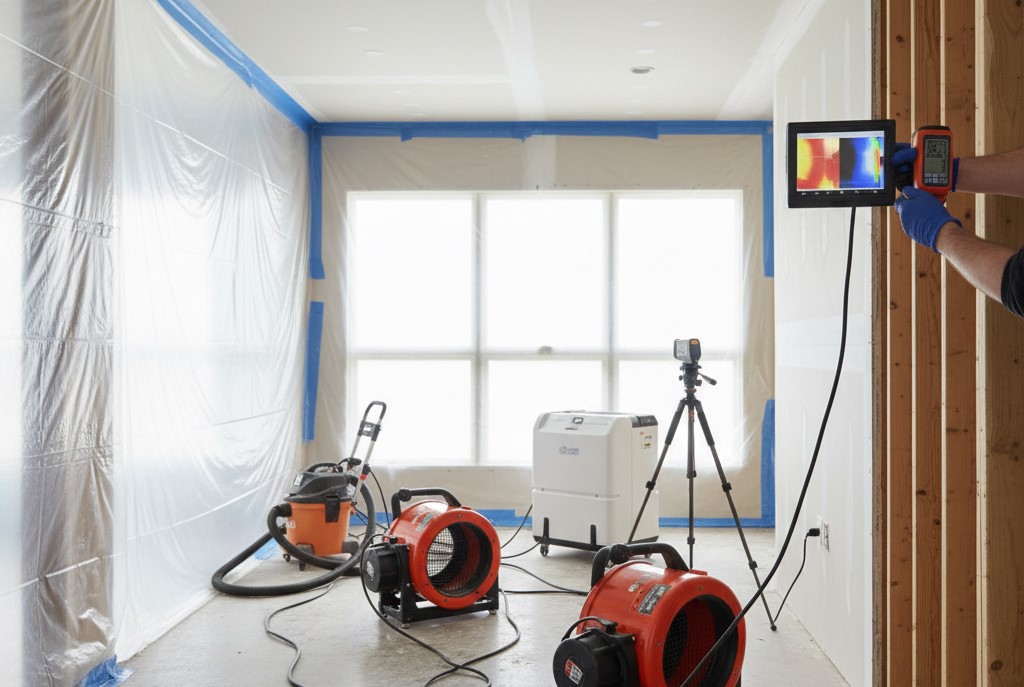
Thermal imaging cameras identify moisture pockets inside wall cavities and behind tile where surface conditions appear normal. Calibrated moisture meters measure wood and drywall moisture content at depth — the relevant metric for mold risk, not surface feel. Air quality spore sampling quantifies airborne mold concentrations at levels far below the threshold of visible contamination or odor detection. None of these capabilities are available through consumer channels, and each is material to determining whether a structure is safe for habitation following saltwater flooding.
The saltwater flushing protocol requires knowledge of material-specific tolerances — which surfaces can be flushed effectively, which must be removed regardless, and how flushing interacts with structural assemblies to avoid driving contamination deeper into building envelope components. Stachybotrys contamination on drywall paper facing cannot be surface-treated; the paper must be physically removed. Wood framing contaminated at the surface level can be treated with EPA-registered fungicides if moisture content is brought within acceptable range; framing with deep mycelia penetration requires replacement. These distinctions require professional assessment.
Insurance companies increasingly require a certified post-remediation clearance report — generated after independent air quality testing confirms that airborne spore concentrations have returned to acceptable baseline levels — before approving reconstruction payments. Without this documentation, insurance claims remain in dispute and reconstruction cannot proceed on a reimbursable basis.
Professional saltwater mold remediation services include:
- Emergency assessment and moisture mapping
- Containment with negative air pressure to prevent cross-contamination during work
- HEPA vacuuming prior to material removal
- Saltwater-specific flushing protocol
- Structural material removal and disposal per EPA guidelines
- Industrial drying with continuous monitoring
- Post-remediation air quality testing
- Certified clearance report for insurance documentation
Call (877) 360-5502) for assessment — available 24/7 for emergency response across New Jersey Shore communities.
Insurance and FEMA — What Shore Homeowners Need to Know
Coverage for storm surge mold damage in New Jersey involves a policy structure distinction that many homeowners discover only at the point of claim. Understanding this structure before a storm event significantly affects recovery outcomes.
Standard homeowners insurance generally covers mold remediation when it results from a sudden, accidental peril covered under the policy — wind-driven rain entering through storm-damaged walls, for example, qualifies under most policies. However, storm surge — water entering a structure from ground level as a result of coastal flooding — is categorically classified as flood damage under standard insurance policy language and is explicitly excluded from standard homeowners coverage. Homeowners insurance covers damage above the flood line; flood damage below it requires a separate policy.
Flood insurance through the National Flood Insurance Program (NFIP) is the standard coverage instrument for Jersey Shore properties. NFIP policies cover the structure and, under contents coverage, personal property. However, NFIP policies do not cover temporary housing, landscaping, or some categories of personal property. The maximum coverage limits under NFIP — $250,000 for residential structures — may be insufficient for higher-value coastal properties, for which private flood insurance supplements are available.
FEMA Individual Assistance provides grants and low-interest disaster loans for uninsured and underinsured losses, but only when the President issues a federal disaster declaration for the affected county. Not every nor'easter triggers a declaration. When one is issued, FEMA requires documentation of the damage, proof of existing insurance, and evidence of mitigation steps taken promptly following damage discovery.
Critical actions to protect your insurance position:
- Photograph all damage in full detail before any cleanup begins — this is legally required for claim validity
- Retain all damaged materials until your insurance adjuster has completed a physical inspection
- Document all emergency expenses with receipts — pumping, emergency board-up, temporary heating
- Request a certified remediation clearance report from your remediation contractor
- File your FEMA Individual Assistance application within 60 days of any federal disaster declaration
Professional remediation in New Jersey for saltwater storm surge damage ranges from approximately $6,000 for limited basement flooding to substantially higher figures for whole-structure events. Without appropriate insurance coverage in place before the event, these costs fall entirely to the property owner.
We provide complete damage documentation to support insurance claims — call (877) 360-5502) to begin the documentation process.
Frequently Asked Questions
Does saltwater flooding always cause mold in Jersey Shore homes? Saltwater flooding does not guarantee mold growth, but if building materials remained wet for more than 24 to 48 hours — the typical scenario when power outages disable heating and ventilation — mold growth is highly probable even before visible evidence appears. The hygroscopic properties of salt embedded in building materials extend the at-risk period significantly beyond what freshwater flooding produces.
How quickly does mold grow after storm surge flooding? Aspergillus and Penicillium species can initiate active growth within 24 hours at relative humidity above 78%. Stachybotrys chartarum establishes visible colonies on wet drywall within 48 to 72 hours. In unheated, closed shore homes during winter, both thresholds are reached almost immediately following flooding.
Does homeowners insurance cover saltwater mold damage in New Jersey? Standard homeowners insurance typically excludes storm surge damage, which is classified as flood damage. Flood coverage requires a separate NFIP or private flood insurance policy. Mold caused by wind-driven rain entering through storm-damaged openings may be covered under homeowners insurance, depending on policy terms. Consulting your insurance agent before storm season to confirm your coverage structure is advisable.
Can saltwater mold be cleaned without professional remediation? Surface cleaning removes visible mold but does not address mycelia growth within building materials, does not neutralize salt contamination responsible for ongoing moisture absorption, and does not produce the certified clearance documentation required by insurance programs. For saltwater flooding, professional remediation addresses the full scope of contamination that surface cleaning cannot reach.
How can I tell if my shore home has hidden mold after a storm? Indicators include a persistent musty odor that persists after surface drying, visible discoloration on walls, ceilings, or floors, unexplained respiratory symptoms in household members, or a documented flooding history. Thermal imaging and professional air quality spore sampling detect hidden contamination before visible colonies develop. The NJ Department of Health advises treating any property wet for more than 48 hours as presumptively contaminated pending professional assessment.
My vacation home was unoccupied during the storm — what should I do before returning? If the property was flooded or experienced elevated humidity for more than 48 hours, assume mold contamination is present. Have a professional inspection conducted before extended occupancy. Shore vacation homes flooded in winter and left unoccupied until spring may contain mold growth throughout the structure — in living areas, crawl spaces, HVAC systems, and attic spaces — that poses a health risk upon re-entry without prior assessment and remediation.
Conclusion
The Jersey Shore storm cycle does not end. Nor'easters will continue to drive Atlantic storm surge into coastal communities with the regularity that the historical record establishes — with increasing severity as sea levels rise and storm intensity tracks upward with ocean temperatures. For homeowners in Atlantic City, Brigantine, Asbury Park, Long Branch, Toms River, Point Pleasant Beach, Wildwood, Cape May, Belmar, Manasquan, Sea Bright, and Sea Isle City, the question is not whether the next flooding event will occur — it is whether the response will be fast enough to prevent saltwater mold from establishing in your home's structure.
The biology is clear: 48 hours is the window. The chemistry is clear: saltwater requires flushing before drying. The clinical evidence is clear: the most vulnerable members of your household — children, elderly parents, anyone managing a respiratory condition — face documented health risks from mold exposure that timely professional response prevents.
Crawl space beneath your home. Pier foundation. Pre-1980 construction. Vacant through the winter. Any one of these characteristics places your property in the highest risk category for saltwater mold following storm surge. Several in combination represent a near-certainty of contamination if flooding occurs and response is delayed.
Call (877) 360-5502 — 24/7 emergency mold inspection and remediation across New Jersey Shore communities including Atlantic City, Brigantine, Asbury Park, Long Branch, Toms River, Point Pleasant Beach, Wildwood, Cape May, and surrounding communities throughout Monmouth, Ocean, and Cape May Counties.