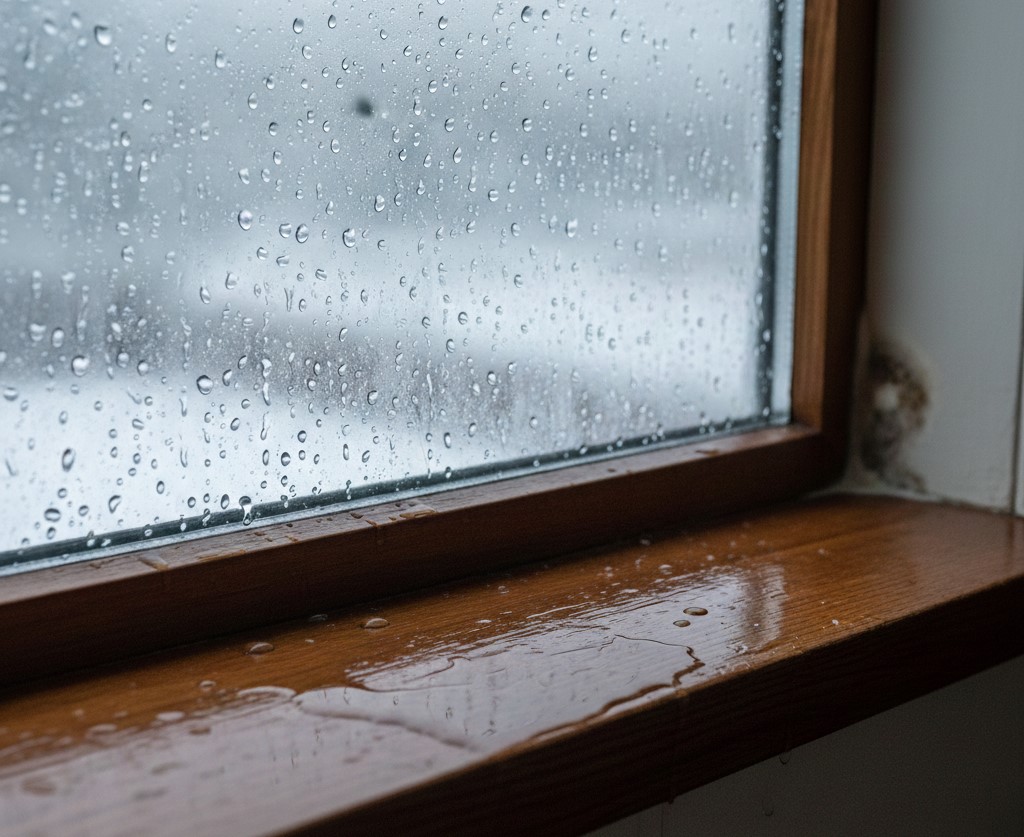
Window condensation occurs when warm, moisture-laden indoor air contacts cold glass surfaces, causing water vapor to condense into liquid droplets that pool on sills and drip onto surrounding materials. This persistent moisture creates ideal conditions for mold growth within 24-48 hours and causes progressive damage to wood frames, drywall, and paint throughout winter months. Northeast and Midwest homeowners face particularly severe condensation problems due to extreme temperature differentials—outdoor temperatures from -20°F to 20°F combined with heated interiors at 68-72°F create 50-90°F differences across window glass guaranteeing condensation when indoor humidity exceeds safe thresholds.
The familiar winter morning scene repeats daily throughout Chicago, Detroit, Buffalo, and New York City—frost patterns decorate windows from outside while water streams down interior glass, pooling on sills and soaking into walls below. According to the New York City Department of Health, 68% of apartments in pre-war buildings experience winter window condensation leading to mold contamination. These water droplets aren't harmless nuisances—within 24-48 hours, the EPA documents that mold spores germinate on wet surfaces; within weeks, paint bubbles and wood softens; within months, drywall crumbles requiring repairs costing $2,000-$10,000.
Understanding condensation physics, damage progression, and region-specific solutions prevents structural damage while protecting families from mold exposure. If you're experiencing visible mold exceeding 10 square feet, black mold growth, or soft drywall around windows, call professional mold remediation specialists at (877) 360-5502 immediately. Northeast and Midwest winter conditions cause rapid escalation from minor condensation to major contamination requiring professional intervention.
Why Windows Sweat in Northeast & Midwest Winters
Window condensation results from dew point physics—when air containing water vapor cools below its dew point temperature, moisture condenses from gas to liquid on the coldest available surface. In heated homes during winter, interior glass surfaces become the coldest point where warm humid indoor air makes contact, causing immediate condensation when temperature and humidity conditions align. A Chicago home heated to 70°F with outdoor temperatures at -10°F creates an 80°F temperature differential across window glass—single-pane windows maintain interior glass surfaces near 20-25°F while double-pane windows reach 30-40°F, both cold enough to cause condensation if indoor humidity exceeds corresponding safe thresholds.
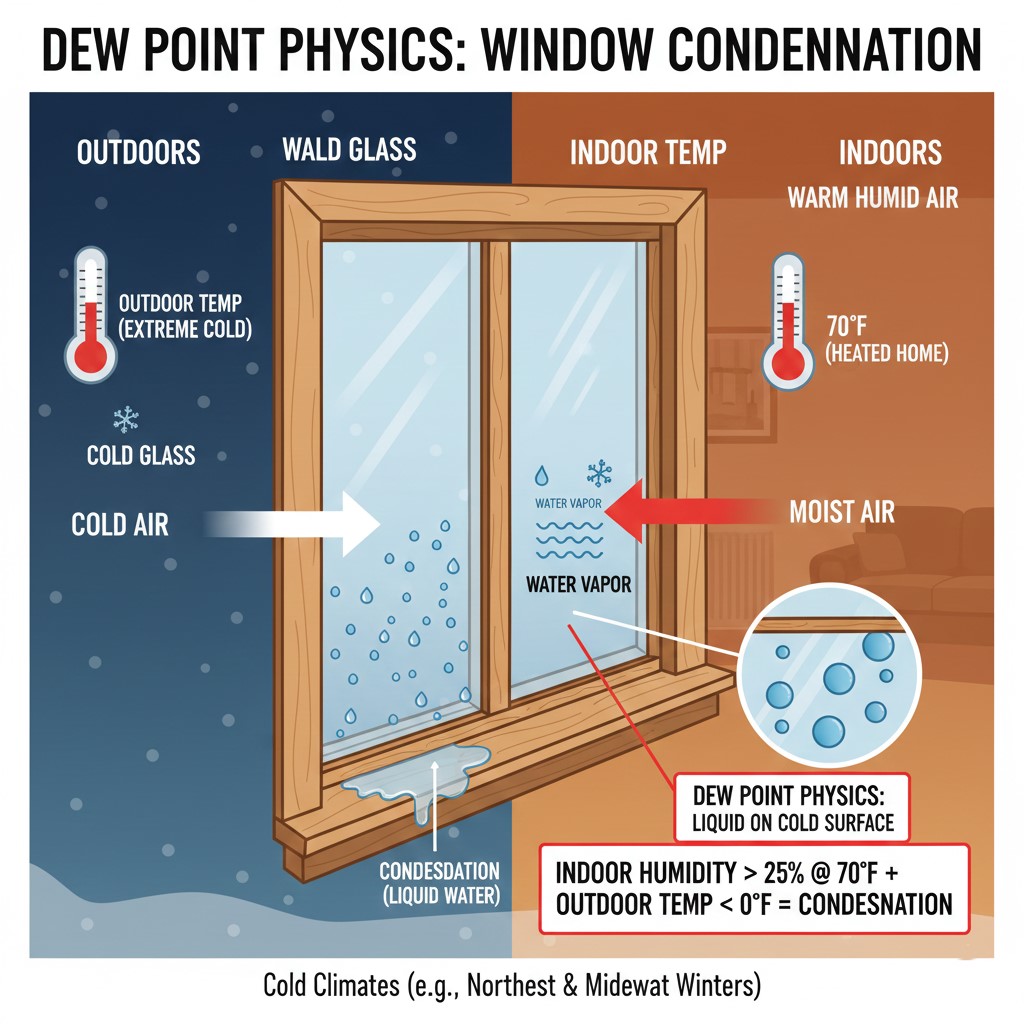
Temperature differentials in cold climates dramatically exceed moderate regions. While coastal homes might experience 20-30°F differences, Northeast and Midwest homes routinely face 40-60°F differentials with extreme cold snaps creating 80-90°F differences. At -20°F outdoors and 70°F indoors—common in Buffalo, northern Michigan, and Chicago during polar vortex events—even double-pane windows struggle maintaining interior glass temperatures above freezing. At these surface temperatures, indoor humidity above 20-25% causes immediate condensation as water vapor contacts frigid glass.
Prolonged cold periods distinguish these regions from brief cold snaps elsewhere. From November through March, sustained sub-freezing temperatures persist for weeks at a time. Cleveland averages 21°F in January with frequent periods below 10°F. Detroit sees similar conditions at 18°F average lows. This four-to-five month exposure means windows remain cold continuously, requiring constant humidity vigilance rather than managing occasional cold days.
Older housing stock throughout the Northeast compounds problems. The U.S. Census Bureau reports approximately 60% of Northeastern homes were built before 1980, predating modern energy codes requiring improved insulation. These homes feature original single-pane windows, minimal wall insulation, and numerous air leakage points. In New York City, pre-war buildings constructed before 1940 dominate many neighborhoods, featuring single-pane wood windows and steam heat systems creating severe humidity challenges.
Modern construction creates different problems through the energy efficiency paradox. Post-2000 homes built to current energy codes feature extensive air sealing, spray foam insulation, and tight construction dramatically reducing air exchange. While heating efficiency improves, moisture accumulates faster without natural ventilation. The American Society of Heating, Refrigerating and Air-Conditioning Engineers (ASHRAE) estimates modern homes exchange interior air only 0.35 times per hour compared to 1.0-1.5 times in older leaky construction—meaning moisture generated by occupants accumulates requiring mechanical ventilation for removal.
Lake-effect moisture from the Great Lakes increases outdoor humidity even during winter. Buffalo and Cleveland positioned along Lake Erie experience lake-effect snow events where relatively warm lake water generates moisture-laden air. While outdoor temperatures remain cold, elevated moisture content means outdoor air can't absorb indoor humidity through natural air exchange as effectively as drier continental air.
City-Specific Window Condensation Patterns
New York City apartment buildings face unique challenges from steam heat systems residents cannot control. Pre-war buildings feature single-pipe steam radiators operating at full capacity regardless of outdoor conditions or resident preferences, driven by building-wide boilers following NYC housing code requiring minimum 68°F indoor temperatures October through May. These systems heat apartments to 75-80°F while releasing 2-4 pints of moisture daily as steam condenses on radiator surfaces. Residents' only temperature control involves opening windows to cool overheated apartments—creating the exact cold glass surfaces that cause severe condensation when warm humid interior air contacts frigid windows.
Chicago represents continental climate extremes with temperature swings unmatched elsewhere. Average January lows reach 15°F but polar vortex events regularly drop temperatures to -10°F to -20°F for multi-day periods. These rapid temperature changes—dropping from 30°F to -10°F overnight—cause sudden condensation as windows that remained dry suddenly stream with water. Forced-air heating common in Midwest homes naturally dries air, prompting homeowners to install whole-house humidifiers. However, humidifiers set at comfortable 40% humidity create severe condensation during cold snaps when safe maximum drops to 25%.
Philadelphia and Pittsburgh share Pennsylvania's rowhome architecture creating ventilation challenges absent in detached homes. Rowhomes lack side windows for cross-ventilation, relying entirely on front and rear openings for air exchange. This architectural limitation traps moisture during winter when windows remain closed, concentrating humidity without dispersion paths. Pittsburgh's valley location compounds problems—morning fog and shaded hillside homes receive minimal winter sunlight keeping windows cold throughout daylight hours even when afternoon temperatures reach 35°F.
Detroit and Michigan communities face Great Lakes humidity combined with severe temperatures and industrial-era housing. The state's automotive industry boom created extensive worker housing in the early-to-mid 20th century featuring minimal insulation and single-pane windows—construction adequate then but severely deficient now. Lake Michigan influences western Michigan while Lake Huron affects eastern communities, maintaining elevated outdoor humidity preventing natural moisture dispersion through air exchange.
The Hidden Damage: From Water Drops to Structural Problems
Window condensation causes progressive damage escalating from minor aesthetic issues to major structural failures over weeks to months without intervention. Water pooling on window sills begins immediately when condensation exceeds evaporation rates—a single streaming window deposits 1-2 cups of water on sills over several hours. Wood sills absorb moisture through porous grain structure and paint cracks, with moisture content rising from normal 8-12% to 15-18% within 24 hours, approaching the 20% threshold where mold growth becomes viable according to EPA research.
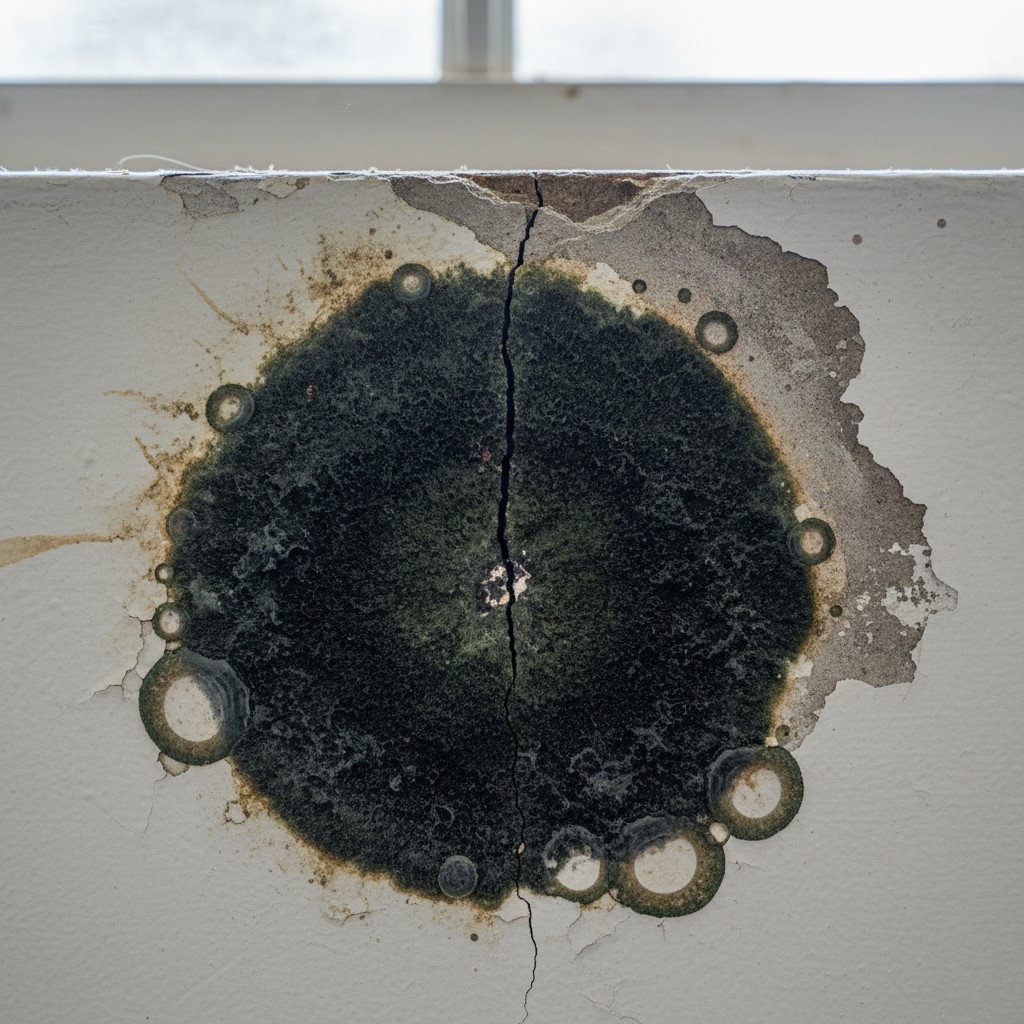
Mold spore germination begins when moisture conditions remain favorable for 24-48 hours continuously per CDC documentation. Common window molds include Cladosporium (black or olive-green patches), Aspergillus (gray or yellow powdery growth), and Stachybotrys chartarum—black mold producing slimy dark growth and mycotoxins. Early-stage mold appears as pinhead-sized black dots in window corners and rubber gasket channels where moisture accumulates. Within 1-4 weeks, these colonies mature releasing millions of spores that land on adjacent surfaces, spreading across frames and sills as fuzzy black or green patches covering increasing areas.
Drywall saturation develops as water runs down walls from sills. Gypsum core and paper facings absorb water through capillary action pulling moisture 6-12 inches below visible contact. Visual indicators include discoloration (yellowing or browning), paint bubbling, soft spots when pressed, and eventual crumbling of saturated areas. Drywall moisture content exceeding 1% creates mold conditions; severe saturation reaches 5-8% requiring complete panel replacement.
Wood rot represents the most serious structural consequence. Decay fungi require wood moisture content exceeding 28% to actively digest wood cellulose—conditions easily achieved with repeated condensation wetting wood that never fully dries. Early rot appears as darkening and softening of surfaces. Advanced rot creates spongy consistency easily penetrated with screwdrivers. Window sills, frames, and surrounding wall framing suffer progressive deterioration requiring replacement—a $500 frame repair becomes $3,000-$5,000 when wall studs require replacement.
Health risks from mold exposure particularly affect children, elderly, and those with compromised immune systems. The Institute of Medicine documented that indoor mold exposure associates with respiratory symptoms, cough, and wheeze while exacerbating asthma. Symptoms include nasal congestion, sneezing, watery eyes, skin irritation, and persistent headaches improving when away from contaminated environments. Black mold produces mycotoxins causing potentially severe reactions including memory loss and organ damage with prolonged exposure.
| Damage Type | Repair Cost | Timeline | Prevention Cost |
|---|---|---|---|
| Professional mold remediation | $500-$3,000 | Month 1-2 | $1,500-2,500 dehumidifier |
| Wood frame repair | $500-$2,000/window | Month 2-6 | $400-800 window replacement |
| Drywall replacement | $300-$800/window | Month 3-12 | $50-150 air sealing |
| Structural framing repair | $2,000-$5,000 | Month 6-18 | $2,000-3,500 ERV system |
If you're experiencing soft drywall, visible mold exceeding 10 square feet, or health symptoms in Buffalo, Pittsburgh, Cleveland, or Rochester, call (877) 360-5502 immediately. Winter condensation damage escalates rapidly—minor mold today becomes major structural damage requiring thousands in repairs within months.
What's Causing Excessive Indoor Humidity?
Indoor humidity during winter results from continuous moisture generation by occupants and activities combined with inadequate removal through ventilation. A family of four naturally generates 10-20 pints of moisture daily through normal activities before considering additional sources. This accumulates in tightly sealed homes lacking mechanical ventilation, driving humidity above safe thresholds where condensation occurs on cold glass.
Cooking releases 2-4 pints daily depending on methods. Boiling water for pasta, steaming vegetables, dishwasher operation, and oven cooking add water vapor. A boiling pot releases approximately 2 pints per hour. Range hoods venting outside remove this moisture, but recirculating hoods merely filter odors while returning moisture. Many older Northeast homes lack range hood ventilation entirely.
Showering releases approximately 0.5 pints per 10-minute shower. A family taking four daily showers adds 2 pints minimum. Bathroom exhaust fans must vent outside, yet homeowners often shut fans immediately upon leaving bathrooms. Building science research demonstrates bathroom humidity remains elevated 20-30 minutes after showering requiring continued fan operation throughout this period.
Indoor laundry drying releases 4-6 pints per load. Dryers venting improperly or intentional indoor drying releases substantial moisture. Winter months see increased indoor drying as residents avoid dryer energy costs. A single hanging load overnight can raise room humidity from 35% to 55-60%, guaranteeing window condensation during cold weather.
The over-humidification paradox particularly affects Midwest residents. Forced-air furnaces heating cold winter air reduce relative humidity—incoming air at -10°F and 80% RH distributes through warmed homes becoming 15-20% RH at 70°F. This extreme dryness causes discomfort prompting whole-house humidifier installation. However, setting targets at comfortable 40-45% creates severe condensation during extreme cold when safe maximum drops to 25-30%.
Steam heat systems in NYC and older Northeast buildings release moisture as steam condenses on radiators. Single-pipe systems release steam through radiator vents during heating cycles. This continuous moisture addition occurs throughout winter without occupant control. Combined with overheating forcing window opening, steam heat creates worst-case conditions—high humidity plus cold glass equals guaranteed damage.
Basement moisture rising through unsealed foundations contributes significantly in older Pennsylvania and Ohio homes. Concrete allows water vapor transmission unless properly sealed. Dirt-floor basements release continuous moisture migrating upward through stack effect—warm air rising pulls basement air upward maintaining elevated whole-house humidity despite occupant efforts.
Ideal Winter Humidity Levels for Cold Climates
Optimal indoor humidity during winter must balance occupant comfort against condensation prevention, with cold glass surface temperature determining maximum safe levels. The colder outdoor temperatures drop, the lower indoor humidity must be to prevent condensation regardless of comfort preferences. The American Society of Heating, Refrigerating and Air-Conditioning Engineers (ASHRAE) publishes guidelines correlating outdoor temperature with maximum safe indoor humidity preventing condensation on typical double-pane windows.
| Outdoor Temperature | Maximum Safe Indoor RH | Typical Locations |
|---|---|---|
| -20°F to -10°F | 15-20% | Buffalo cold snaps, northern MI |
| -10°F to 0°F | 20-25% | Chicago, Detroit deep winter |
| 0°F to 10°F | 25-30% | All regions Jan-Feb typical |
| 10°F to 20°F | 30-35% | Common Northeast/Midwest winter |
| 20°F to 30°F | 35-40% | NYC, Philadelphia typical |
| 30°F to 40°F | 40-50% | Late fall, early spring |
When temperatures drop suddenly during polar vortex events, indoor humidity must decrease immediately. Waiting for condensation before adjusting causes damage during lag periods. Weather forecasts predicting drops below 10°F should trigger preemptive reduction—turn off humidifiers or increase dehumidification before cold air arrives.
Measuring humidity accurately requires digital hygrometers providing ±2-3% accuracy costing $15-40. Place near windows in coldest rooms (north-facing bedrooms) for most relevant readings. Monitor multiple locations as humidity varies by floor and room. Morning readings prove most critical occurring during coldest temperatures when condensation risk peaks.
Chicago, Detroit, and Cleveland regularly experiencing -10°F must maintain 25-30% humidity maximum December through February. Residents report dry nose discomfort and static electricity at these levels, yet alternatives involve guaranteed window damage and thousands in repairs. NYC and Philadelphia with typical 20-30°F temperatures permit 35-40% for most of winter, adjusting to 30% during occasional cold snaps below 20°F.
Immediate Actions to Stop Window Sweating Today
Reducing moisture sources provides fastest condensation relief requiring no purchases. Bathroom exhaust fans must run 20-30 minutes after showering—the period required for humidity to decrease per building science research. Installing timer switches costing $30-50 automates extended operation. Kitchen range hoods must vent outside, exhausting cooking moisture during and 15 minutes after cooking.
Stop indoor laundry drying eliminating 4-6 pints daily moisture. Dryers must vent outside through dedicated ducts. For homes without dryers, laundromat use during winter prevents moisture accumulation compared to hanging damp clothes releasing moisture over 8-12 hours indoors.
Move houseplants away from windows removing moisture sources from coldest surfaces. Group plants in warmer rooms dispersing transpired moisture into larger air volumes. Cover aquariums with fitted lids reducing evaporation by 60-70%.
Whole-house humidifiers must reduce output or shut off completely when condensation appears. Many homeowners install humidifiers then forget about them allowing continuous year-round operation. Winter requires active management adjusting weekly for temperature changes. During polar vortex events dropping temperatures to -10°F or below, shut humidifiers off entirely.
Open blinds and curtains during daytime allowing heated air from room interiors to contact windows warming glass surfaces several degrees. Run ceiling fans on low speed in winter mode (clockwise rotation) pushing warm air accumulated at ceilings downward toward windows. Keep interior doors open allowing moisture distribution rather than concentrating in closed bedrooms.
Strategic window opening during warmest afternoon hours (1-3 PM) exchanges humid indoor air with cold dry outdoor air. Opening windows 5-10 minutes creates complete air exchange without excessive heat loss. At 30°F outdoor temperature and 80% RH, outdoor air contains less absolute moisture than indoor air at 70°F and 40% RH—bringing cold air inside and heating it reduces relative humidity.
Daily morning wipe-down prevents mold germination by removing water before 24-hour exposure threshold. Squeegees efficiently remove standing water using top-to-bottom strokes. Microfiber cloths absorb remaining moisture from frames, sills, and walls below windows. Weekly vinegar spray (50/50 white vinegar and water) provides mold prevention through acetic acid creating unfavorable pH for growth.
NYC apartment dwellers with steam heat lack radiator control requiring different strategies. Thermostatic radiator valves retrofit onto radiators allowing temperature control at $50-150 per radiator where landlords permit installation. For apartments prohibiting modifications, portable dehumidifiers in bedrooms provide localized control—50-70 pint units costing $200-400 manage single-room humidity effectively.
Long-Term Solutions for Condensation Prevention
Energy Recovery Ventilator (ERV) and Heat Recovery Ventilator (HRV) systems provide the most effective long-term solution for tightly sealed modern homes. These systems continuously exchange stale humid indoor air with fresh outdoor air while recovering 70-90% of heating energy otherwise lost through simple window ventilation. Installation costs range $1,500-$3,500 for whole-house systems integrated with existing HVAC ductwork. The International Residential Code for northern climate zones now requires mechanical ventilation recognizing modern airtight construction traps moisture without natural infiltration.
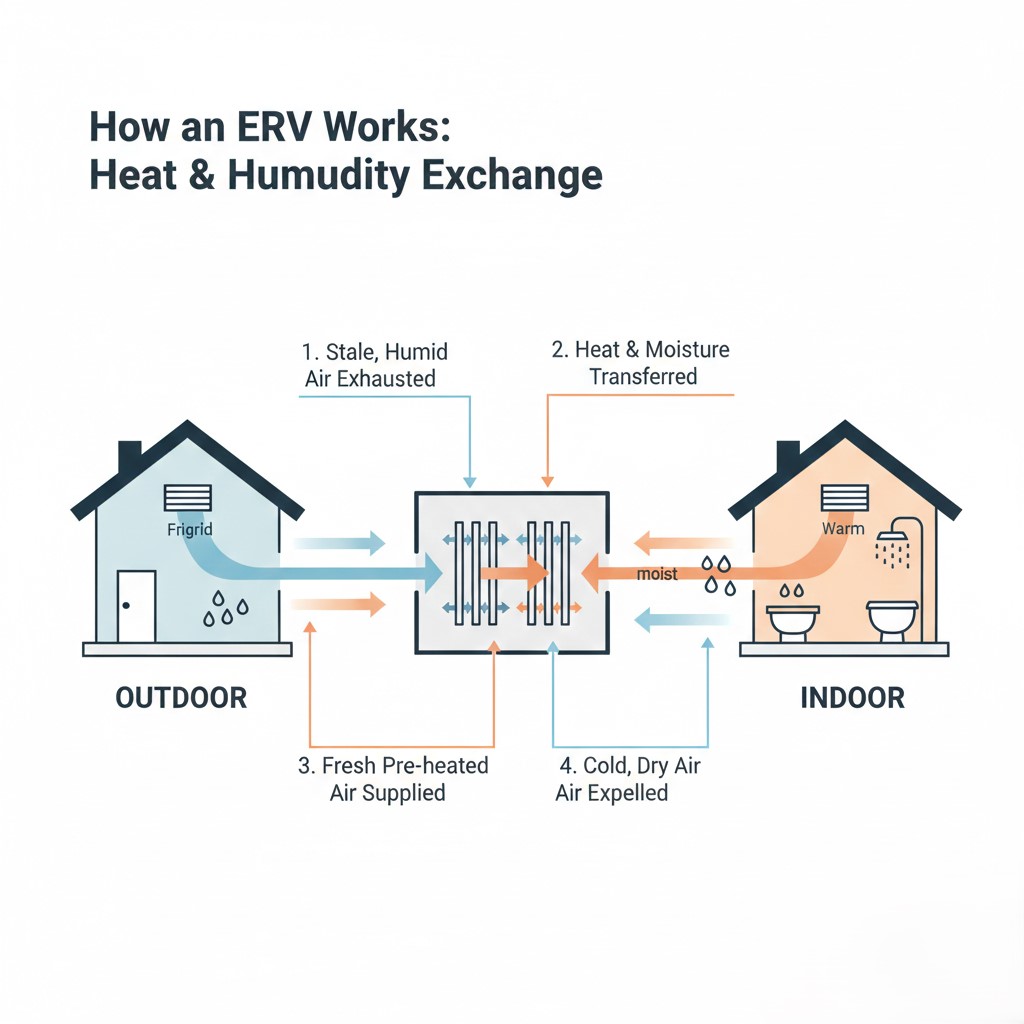
Payback periods average 7-10 years through combined energy savings ($200-400 annually) and prevented damage costs ($2,000-$10,000). Chicago, Detroit, and Buffalo installations especially benefit where extreme cold and tight construction create severe humidity control challenges.
Whole-house dehumidifiers integrated with HVAC systems remove 90-130 pints daily while operating automatically maintaining set humidity levels. Installation costs $1,200-$2,500 with monthly operating costs of $20-40 during winter. Pennsylvania valley homes and properties with damp basements benefit significantly from comprehensive moisture removal exceeding portable unit capacity.
Double-pane replacement windows represent permanent solutions addressing root cause—cold glass surfaces. Modern windows with argon-filled airspaces and low-E coatings achieve U-factors of 0.25-0.30 representing 70% improvement over single-pane windows near 1.0. Interior glass surfaces remain 15-20°F warmer substantially reducing condensation even at moderate humidity.
Costs average $400-$800 per window installed with regional variation: NYC $600-$1,000, Chicago $450-$850, Pennsylvania/Ohio $350-$700. Energy savings average $30-50 per window annually. At 10-12 windows, total costs reach $5,000-$10,000 with payback of 10-15 years from energy alone—substantially shorter considering prevented damage.
Triple-pane windows with U-factors 0.15-0.20 virtually eliminate condensation where -20°F occurs regularly. Buffalo, northern Michigan, and Chicago north suburbs justify $800-$1,200 per window costs for superior performance in harsh climates.
Storm windows offer budget alternatives creating insulating air spaces for $150-$300 per window reducing condensation 40-50%. Interior magnetic storm panels mount inside creating similar effects—accessible for renters or budget-constrained homeowners.
| Solution | Cost | Condensation Reduction | Best For |
|---|---|---|---|
| ERV/HRV System | $1,500-$3,500 | 60-80% | Tight modern homes |
| Whole-house dehumidifier | $1,200-$2,500 | 70-90% | High humidity homes |
| Double-pane windows | $4,000-$9,600 (12 windows) | 70-80% | Permanent solution |
| Portable dehumidifiers | $200-$400 | 50-60% | Apartments, rentals |
| Storm windows | $1,800-$3,600 (12 windows) | 40-50% | Budget option |
When Mold Is Already Growing: Emergency Response
Mold on windows appears as pinhead-sized black dots progressing to fuzzy patches covering frames and sills. Common species include Cladosporium (black/green), Aspergillus (gray/yellow), and Stachybotrys (black mold) producing mycotoxins. Health warning signs include persistent sneezing, watery eyes, worsening asthma, skin rashes, and chronic headaches improving when away from home.
The EPA establishes 10 square feet as the threshold requiring professional remediation. Homeowners can clean smaller areas using N-95 respirators (not surgical masks), rubber gloves, eye protection, and ventilation. Mix 1 cup bleach per gallon water for non-porous surfaces or white vinegar for wood. Spray, wait 15 minutes, scrub, wipe clean, and discard materials in sealed bags.
DIY cleaning cannot fix mold inside walls requiring professional opening and remediation, porous materials like drywall and insulation requiring removal, black mold requiring specialized handling, or structural wood rot requiring carpentry plus remediation.
Call (877) 360-5502 immediately if you have mold covering more than 10 square feet (roughly 3×3 feet area), black slimy mold suspected as Stachybotrys, mold inside walls or on insulation, musty smell throughout home (not just at windows), health symptoms in household members, recurring mold after DIY cleaning indicating ongoing moisture, soft or crumbling drywall below windows, or rotted wood frames feeling spongy or deteriorating.
Professional mold remediation includes containment with plastic barriers preventing spread, HEPA air filtration during work, complete material removal not just cleaning, antimicrobial treatment of structural members, source identification and correction, and post-remediation verification testing. Services typically cost $500-$3,000 for window-related mold.
Insurance may cover mold if related to sudden incidents like pipe bursts but usually excludes gradual condensation as maintenance issue. Document problems with dated photographs immediately when discovered and file claims within 30-60 days per policy requirements.
Professional Intervention: When to Call the Experts
Warning signs requiring professional assessment include soft spongy window frames (moisture content exceeding 28% indicates active rot), drywall crumbling below windows (gypsum core deteriorated), visible water staining extending more than 12 inches from windows, black mold present, mold coverage exceeding 10 square feet, musty smell throughout entire home, condensation persisting despite humidity control below 40%, or health symptoms including respiratory problems.
Professional mold remediation services provide thermal imaging identifying hidden moisture, moisture mapping throughout affected areas, mold species testing determining toxicity levels, containment protocols preventing spore distribution, HEPA filtration systems capturing airborne contaminants, complete material removal rather than surface cleaning, antimicrobial treatment of structural components, and post-remediation verification testing confirming complete removal.
Mold remediation costs $500-$3,000 for typical window-related projects with black mold ranging $2,000-$10,000 depending on extent and structural damage. Regional pricing varies with NYC/Manhattan typically higher ($800-$4,000), Chicago suburbs moderate ($600-$3,000), and Pennsylvania/Ohio lower ($500-$2,500) reflecting local labor and material costs.
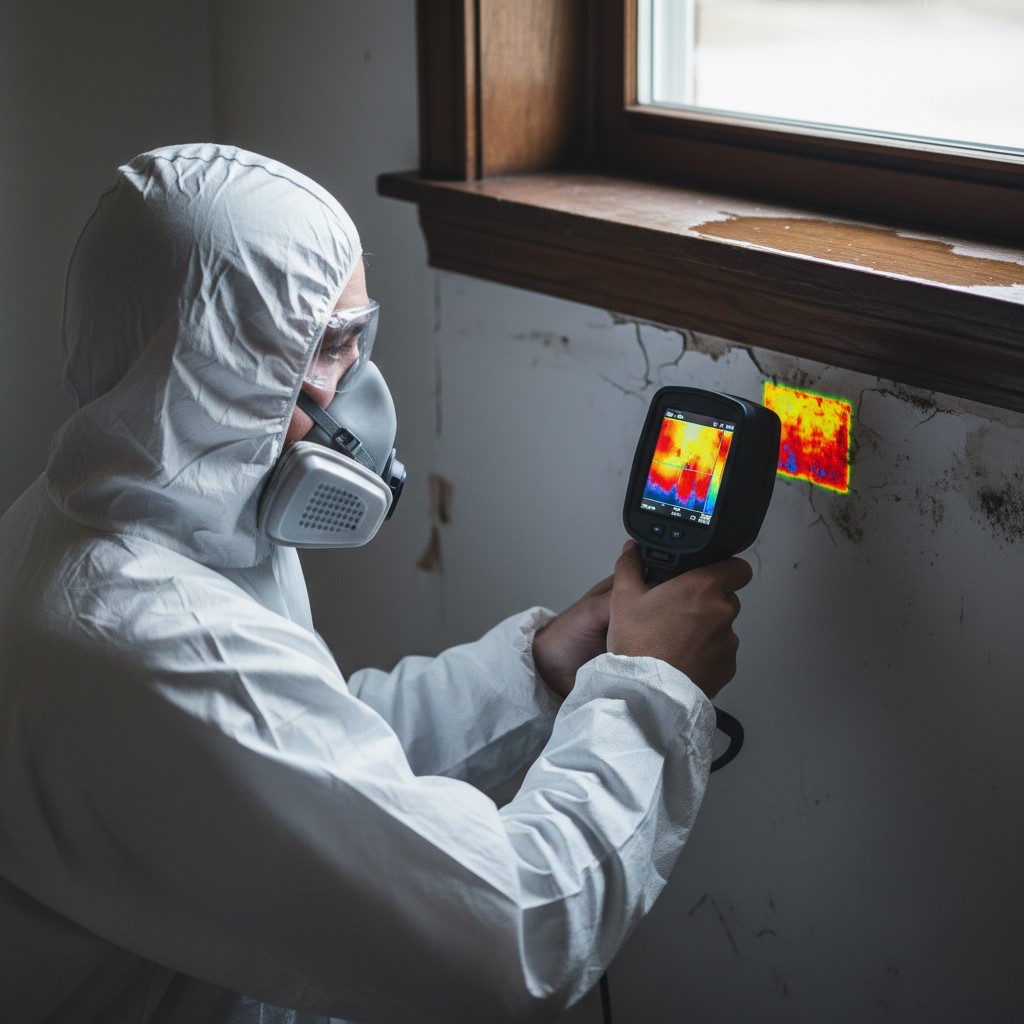
For professional mold remediation services in New York, Pennsylvania, Illinois, Ohio, and Michigan, call (877) 360-5502. Certified specialists provide 24/7 emergency response and comprehensive mold removal solutions designed for cold climate condensation challenges.
Seasonal Maintenance Calendar for Cold Climates
Fall preparation (September-October) requires professional HVAC inspection ($75-150) calibrating furnace humidifiers and checking ductwork. Clean windows and frames thoroughly, check weatherstripping, test operation, and apply exterior caulk. Install hygrometers in bedrooms and living areas establishing baseline readings. Clean gutters preventing ice dams affecting wall moisture.
Winter monitoring (November-March) proves critical. Check for condensation every morning, wipe windows immediately with squeegee or cloth, monitor humidity daily adjusting for outdoor temperature changes, inspect corners weekly for early mold signs (black dots), and lower humidifier settings after every cold snap below 10°F.
Monthly deep checks measure wood moisture near problem windows (should be below 16%), check below sills for drywall softness or staining, clean exhaust fan grilles (lint reduces efficiency), and review humidity logs spotting trends requiring action.
Spring recovery (April-May) inspects for damage including rot, mold, and paint failure. Photograph problems for insurance documentation. Deep clean windows and frames with vinegar solution drying completely. Test moisture levels (should drop to 40-50% as temperatures rise). Plan repairs and upgrades during dry weather—ideal for projects before next winter.
Summer planning (June-August) schedules window replacement, insulation work, ERV/HRV installation, and preventive mold treatments during mild dry conditions. Annual maintenance costs $200-400 (DIY efforts plus professional inspection) preventing $2,000-$10,000 in damage—providing 5:1 to 25:1 return on prevention investment.
FAQs: Window Condensation in Cold Climates
Is window condensation dangerous to my health?
Condensation itself isn't dangerous, but the mold it causes can be. When water sits on frames for 24-48 hours, mold colonies form. Common species cause allergic reactions—sneezing, watery eyes, respiratory irritation. Black mold produces mycotoxins causing severe effects including chronic headaches and respiratory disease. Children, elderly, and immune-compromised individuals face highest risks. If you see mold exceeding 10 square feet or experience health symptoms, call (877) 360-5502 for professional assessment.
Why are my NEW windows still getting condensation?
New energy-efficient windows seal homes tighter trapping moisture without adequate ventilation. The problem isn't windows—it's humidity level. Add mechanical ventilation (ERV/HRV $1,500-$3,000) or whole-house dehumidifier ($1,200-$2,500). Ensure indoor humidity matches outdoor temperature. In Chicago at -10°F, even triple-pane windows condensate if humidity exceeds 25%.
Should I use a humidifier or dehumidifier in winter?
Most Northeast/Midwest homes need LESS humidity in winter, not more. While 25-30% feels dry and uncomfortable, cold glass physics requires these levels. If you have condensation, you have too much humidity. Turn OFF whole-house humidifiers and use portable dehumidifiers in problem rooms. Only add humidity carefully if you have zero condensation and severe comfort issues—but monitor windows daily adjusting immediately if condensation appears.
How much does professional mold removal cost?
Costs vary: small areas under 10 square feet appropriate for DIY cost $50-200 in supplies; professional window-related mold runs $500-$3,000; extensive multi-room remediation costs $2,000-$10,000; black mold with structural damage ranges $5,000-$15,000. Regional pricing varies: NYC/Manhattan $800-$4,000, Chicago suburbs $600-$3,000, Pennsylvania/Ohio $500-$2,500. Most insurance excludes condensation-related mold as maintenance issue.
Do storm windows prevent condensation?
Storm windows reduce condensation by 40-50% creating insulating air space between layers. They're cost-effective temporary solutions at $150-300 per window while saving for full replacement. However, if moisture gets between storm and main window, condensation still occurs. Best for rentals, historic homes, and budget constraints. For permanent solution in Chicago, Detroit, or Buffalo (-10°F+ winters), double-pane replacement reduces condensation 70-80%.
Can I claim insurance for condensation damage?
Rarely. Policies typically exclude gradual damage from maintenance issues—condensation falls here. Insurance MAY cover if sudden incident caused humidity (pipe burst, appliance flood), storm damage led to window failure causing condensation, or mold resulted from covered water damage reported within 30-60 days. Document ALL damage with dated photos immediately. File claims promptly. Most condensation damage isn't covered requiring homeowner responsibility for prevention and repair.
Protect Your Home from Winter Condensation Damage
Window condensation in Northeast and Midwest winters represents more than inconvenience—it's a warning sign of humidity imbalance causing thousands in structural damage and serious health risks from mold. From New York's steam-heated brownstones to Chicago's polar vortex extremes, cold climate homeowners face unique challenges requiring proactive region-specific solutions.
The three-part approach proves most effective: humidity control adjusted daily based on outdoor temperature (25-35% during December-February), ventilation improvements providing mechanical air exchange (ERV/HRV systems) for tightly sealed homes, and window upgrades (double or triple-pane) for severe climate zones. Prevention costs $500-$5,000 depending on solutions. Ignoring condensation costs $2,000-$15,000+ in mold remediation, frame replacement, and drywall repairs.
Remember the golden rule for cold climates: colder outside equals lower humidity inside. At -10°F in Detroit or Chicago, 25% indoor humidity prevents condensation even if uncomfortably dry. Slight discomfort beats thousands in repairs and health risks from mold exposure.
If you're experiencing condensation leading to mold growth, structural damage, or health symptoms in New York, Pennsylvania, Illinois, Ohio, or Michigan, don't wait for problems to worsen. Call (877) 360-5502 now for 24/7 emergency mold remediation service throughout Northeast and Midwest regions. Certified specialists provide same-day response and comprehensive solutions for cold climate condensation challenges. Protect your home and family before winter's next cold snap.
Get Professional Mold Remediation Services Near You
New York: New York City | Buffalo | Rochester | Syracuse | Albany
Pennsylvania: Philadelphia | Pittsburgh | Harrisburg | Allentown | Erie
Illinois: Chicago | Aurora | Naperville | Rockford | Springfield
Ohio: Columbus | Cleveland | Cincinnati | Toledo | Akron
Michigan: Detroit | Grand Rapids | Ann Arbor | Lansing | Flint
24/7 Emergency Mold Remediation - Certified Cold Climate Specialists